You want to know how much low-volume injection moulding costs in the UK. The answers online jump around. Some mention “cheap tooling,” others talk about “rapid moulds,” and none of it gives you a real number. So let’s make this simple and direct. This guide explains what you actually pay, why the cost changes, and what you should expect in 2026.
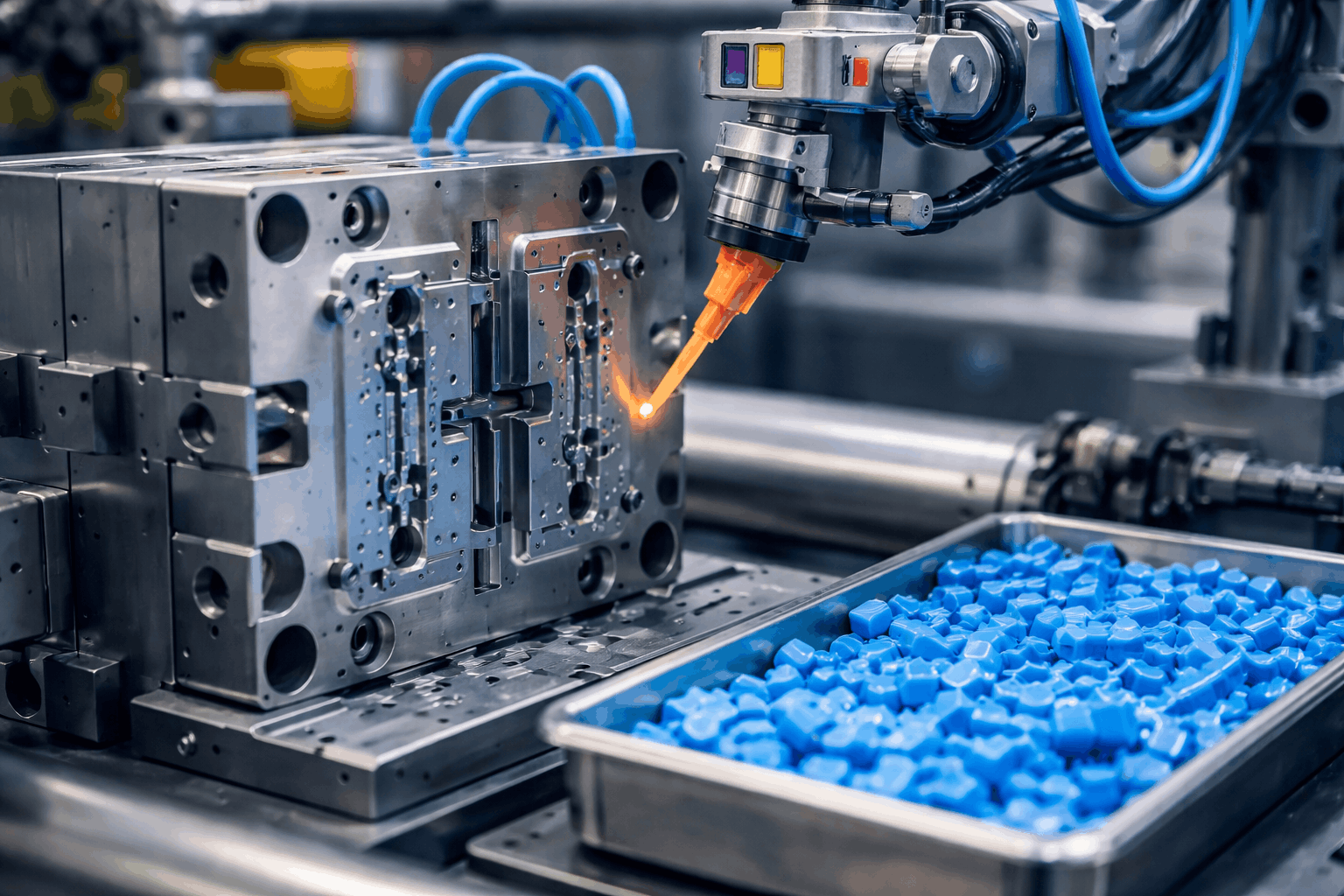
What “Low-Volume” Really Means in the UK
Low-volume injection moulding usually means runs between 100 and 10,000 parts. It’s the middle ground between rapid prototyping and mass production. You choose this when you want real production-grade plastic parts without spending £20,000+ on full steel tooling.
Most UK manufacturers now use aluminium tooling for low-volume batches because it cuts machining time. That drops cost and speeds up production.
Average Low-Volume Injection Moulding Cost in the UK
You pay two things: tooling cost and per-part cost. Here’s the breakdown:
| Cost Type | Typical Price (UK) | Notes |
| Tooling Cost | £1,200 – £6,500 | Aluminium tools; simple parts start lower |
| Per-Part Cost | £0.80 – £6 | Material, cycle time, part size matter |
| Total Cost for 1,000 Parts | £2,500 – £9,000 | Based on simple ABS or PP components |
Most small UK companies spend between £3,000 and £12,000 for a complete low-volume project.
What Drives the Cost
Several factors change your budget. You control many of them.
1. Tooling Material
Aluminium tools cost less and suit batches under 10,000 units. Steel tools last longer but cost more. If you only need proof-of-concept products or early production, aluminium saves money.
2. Part Geometry
Sharp corners, deep ribs, thin walls, threads, and undercuts increase machining time. When possible, simplify the geometry. You save on tooling and shorten lead times.
3. Material Choice
Common materials like ABS and PP cost less. Engineering plastics such as Nylon, PC, and PEEK raise the per-part cost because they need higher mould temperatures and longer cycle times.
4. Batch Size
Larger batches lower per-part cost. You pay the tooling fee once, so more parts stretch its value.
5. Finishing
Texturing, painting, coating, inserts, and ultrasonic welding increase cost. Keep finishes minimal if you want a lower price.
2026 Market Trends Affecting UK Moulding Prices
Several UK manufacturing reports point to rising energy costs, higher hourly labour rates, and improved automation. These shift pricing in predictable ways:
- Energy cost increased production rates by about 3–7% across UK plastics facilities in 2024.
- Automation adoption grew 20% in 2025, which lowered cycle-time costs for simple parts.
- Tooling imports from Europe dropped because UK shops now supply aluminium tools with shorter lead times.
These trends push low-volume moulding prices slightly higher than pre-2023 levels, but turnaround is faster and tooling is more reliable.
Expert Opinions
“Low-volume moulding makes sense when you want real parts fast without locking money into full steel tooling.” — UK Product Engineer, 2024
“The biggest savings come from simplifying the geometry. One design change can cut tooling costs in half.” — Injection Mould Toolmaker, 2025
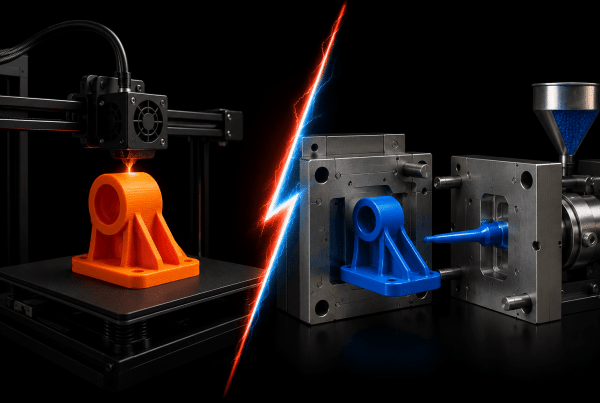
Is Low-Volume Injection Moulding Cheaper Than 3D Printing?
Up to 40 parts, 3D printing can be a winner. But post that, the low-volume injection molds we make make the per-unit cost the same as the 3D print cost. Injection molded parts have superior strength and finish, so it’s a clear winner. But after that, injection moulding drops the per-unit cost fast. At around 300–500 parts, moulding becomes significantly cheaper.
Injection Moulding FAQs
Q: Is low-volume moulding worth it for startups?
Yes. You get production-quality parts without large investment. You also test the market faster.
Q: How long does tooling take?
Most UK toolmakers take 2-4 weeks for aluminium moulds.
Q: Why does one supplier quote £1,500 and another £6,000?
Tool design, machining hours, and finishing vary. Always compare tool lifetime and maintenance.
Q: Can I get colour-matched parts?
Yes. Colour matching adds a small fee, usually £30–£70 per batch.
Q: What is the cheapest way to lower cost?
Simplify the part. Remove undercuts. Avoid unnecessary textures.
When Low-Volume Moulding Makes Sense
You should pick low-volume moulding when you want:
- real production-quality parts
- a reasonable up-front cost
- faster turnaround than traditional tooling
- units ready for market testing
It’s the right option when you know the design is stable and you plan to scale later. You can upgrade to steel tooling after you confirm demand.
Conclusion
Low-volume injection moulding in the UK usually costs between £3,000 and £12,000 for complete production. You pay for tooling, per-part cost, and finishing. Keep the part simple, choose common materials, and pick aluminium tooling to control your budget.
If you plan this early, you avoid overruns and get your parts ready sooner.
For deeper reading: