If you look at where 3D printing was in India 5–6 years ago and where it is today, the difference is honestly quite noticeable.
Back then, it felt more like a niche technology – something limited to labs, colleges, or a few high-end industries. Now, it’s slowly becoming part of real business workflows. Not everywhere yet, but definitely moving in that direction.
A big reason? Access.
You no longer need to own a machine to use 3D printing. Service providers like Precious3D have made it much easier for businesses to just get things printed when needed. That alone has changed how startups and small manufacturers approach product development.
And once people try it, they usually don’t go back to the old way for early-stage work.
So, what’s actually driving this growth?
It’s not just hype. There are some very practical reasons:
- You can test ideas quickly without waiting weeks
- Costs stay under control, especially for small batches
- Custom designs are much easier to produce
- There’s far less material wastage
- It fits well with the whole “manufacture locally” push
None of these are revolutionary on their own—but together, they make a strong case.
What’s changing right now?
A few shifts are becoming pretty clear if you look closely.
It’s no longer just for prototypes
Earlier, 3D printing was mostly used to “see how something looks.” Now, in some cases, those printed parts are actually being used in final products.
Not everywhere, but enough to say things are changing.
On-demand production is catching on
Instead of producing in bulk and storing inventory, some businesses are printing parts only when required.
This works especially well for:
- Spare parts
- Custom orders
- Low-volume products
It reduces risk. And honestly, that’s a big deal for smaller businesses.
Materials are getting better
For a long time, people associated 3D printing with plastic models.
That’s outdated now.
You’ll find:
- Strong engineering plastics
- Resin with very fine detail
- Metal printing (still growing in India, but picking up)
As materials improve, so do use cases.
Healthcare is quietly adopting it
This is one space where the impact feels more meaningful.
We’re seeing:
- Custom prosthetics
- Dental applications
- Surgical models for planning
It’s still evolving, but the direction is promising—especially in a country where affordability matters so much.
Startups are using it smartly
Instead of investing heavily upfront, founders are using 3D printing to test, fail, improve—and then scale.
That flexibility wasn’t really possible earlier, without spending a lot.
Where is it being used the most?
It’s spread out, but some areas stand out:
- Automotive (prototyping, small components)
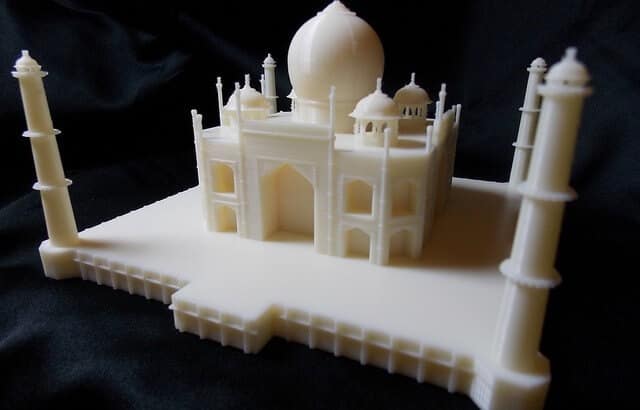
- Architecture (models, concepts)
- Consumer products (custom items)
- Education (practical exposure)
- Healthcare (as mentioned above)
It’s not dominating any single sector yet—but it’s present in many.
One thing people don’t talk about enough: sustainability
3D printing isn’t perfect, but it does reduce waste since material is added layer by layer.
Also, local production means less shipping. That’s another small but important advantage.
What can we expect next?
Nothing dramatic overnight—but steady growth.
- More awareness among businesses
- Better and cheaper machines
- Wider material options
- More integration with automation and AI
Basically, fewer barriers.
Final thought
3D printing in India is in that interesting middle phase—it’s no longer new, but not fully mainstream either.
And that’s usually where the biggest opportunities are.
Tools and services like Precious3D make it easier for businesses to experiment without overcommitting.
Give it a couple of years, and this might just become a standard part of how products are built—not something “innovative,” just something normal.