All Posts By

Chinmay Rathi

Why Custom IoT Enclosures Are the Backbone of Every Successful Hardware Product

The Hidden Hero of Every Smart Device

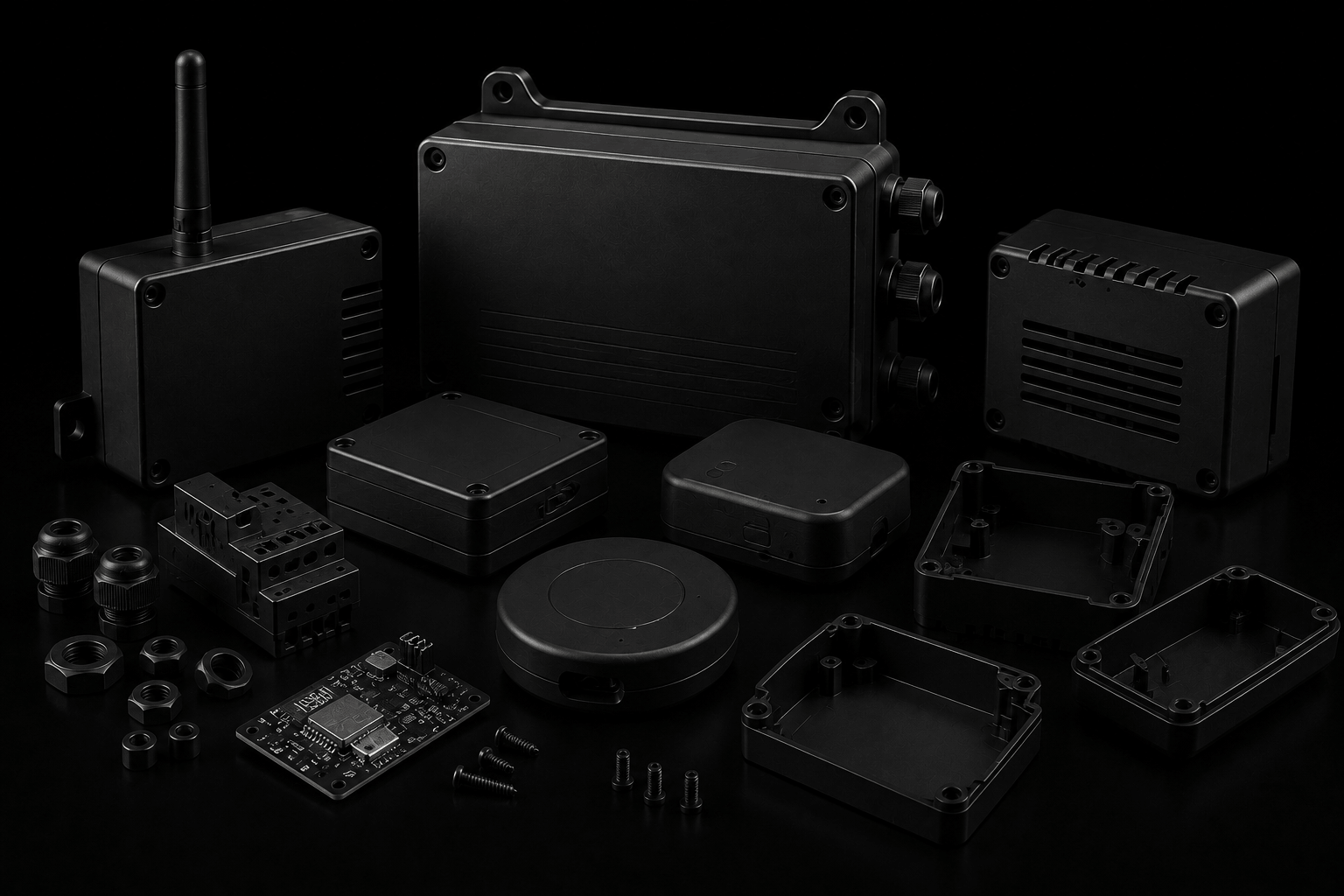
When you think about IoT innovation, sensors and software often come to mind first. But every successful IoT product shares one silent hero — its enclosure. Your enclosure protects, defines, and differentiates your device. It’s not just a box; it’s your brand’s first impression and your product’s first line of defence.

At Precious3D, we help IoT startups and manufacturers create custom IoT enclosures that balance form and function – designed for manufacturing, durability, and scalability.

What Makes a Great IoT Enclosure?

A great IoT enclosure does more than look good. It ensures usability, protection, and easy manufacturability. Here’s what defines an exceptional enclosure:

1. Smart Internal Architecture

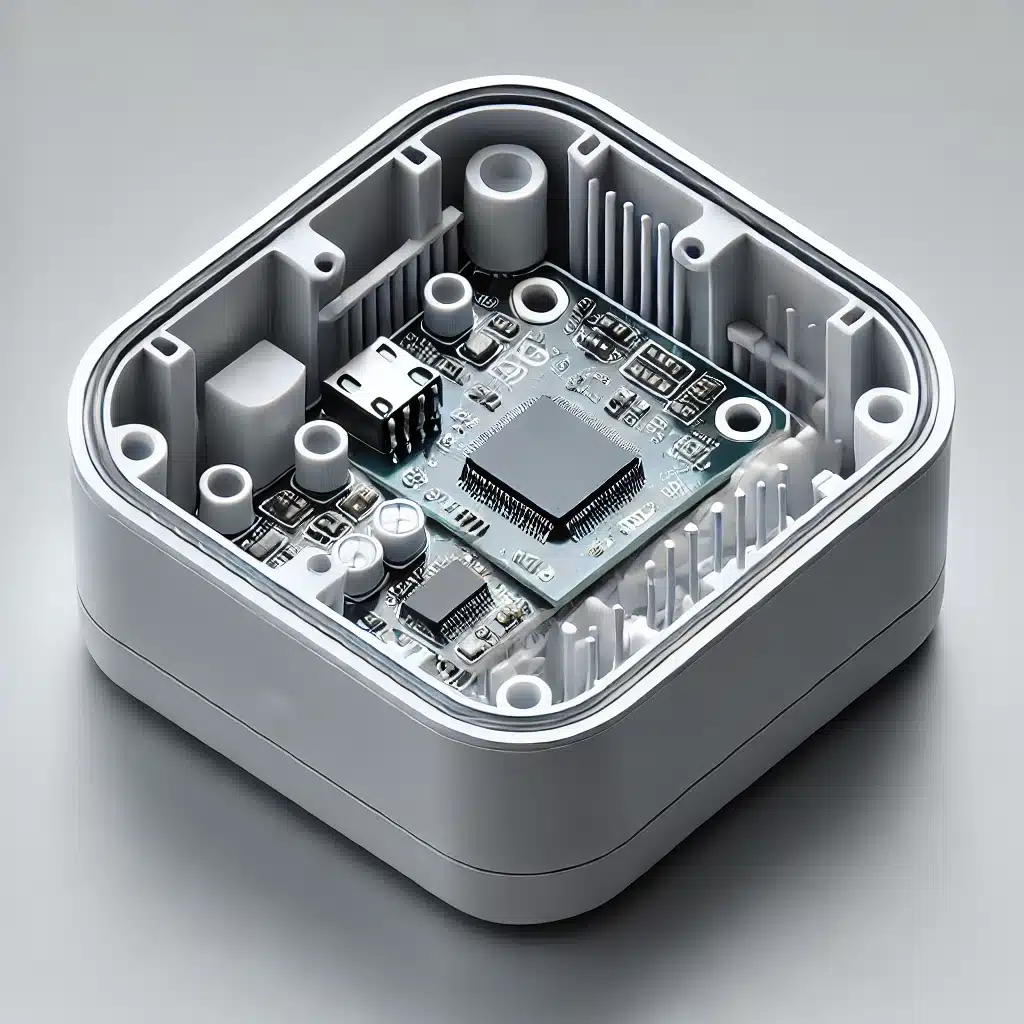
Good internal architecture means fewer problems during assembly. We focus on correct PCB spacing, wire routing, and mounting points. Our 3D modeling and simulation tools help you achieve perfect fits for your boards, buttons, and ports.

2. Durable Material Selection

The right material can extend your device’s life, reduce maintenance, and enhance user satisfaction. Here’s a quick guide to choosing materials based on your product’s environment:

MaterialBest ForKey Benefits
ABS / PC-ABSIndoor devices needing durabilityImpact resistant, smooth finish
FR-ABS / PCHigh heat or flame-prone areasFlame retardant, heat resistant
Nylon / PAIndustrial or mechanical useHigh strength, chemical resistance
Transparent PCSensor visibility or LEDsHigh transparency, UV resistant


3. Aesthetic Design

Your enclosure is your brand’s visual identity. Whether you want a minimalist, industrial, or futuristic look – our designers ensure it reflects your vision and feels right in users’ hands.

4. Manufacturing Feasibility

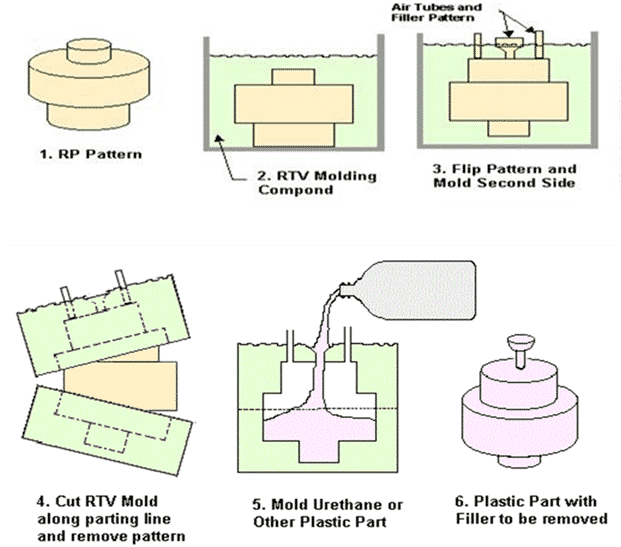
We design for real-world production. Start small with 3D printing or vacuum casting, and scale easily to injection molding when you’re ready for mass manufacturing — without redesigning.

Our End-to-End Process


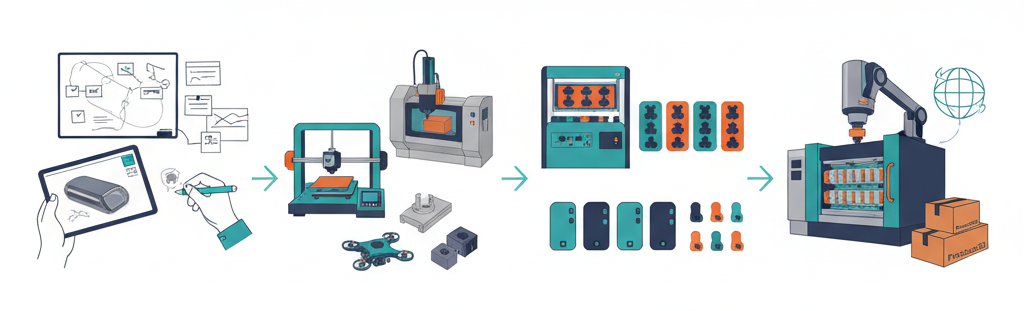
At Precious3D, we simplify your journey from concept to mass production with a complete design-to-manufacture workflow:

1. Concept Design

We understand your product’s function, size, and brand style, then convert your ideas into enclosure concepts aligned with your goals.

2. Prototyping

Using 3D printing (FDM, SLA) or CNC machining, we deliver prototypes in days — perfect for testing ergonomics and aesthetics.

3. Low-Volume Production

Need 100–500 units for investor demos or pilot launches? We use vacuum casting or soft tooling to deliver fast, affordable results.

4. Mass Production

Once validated, we move seamlessly to injection molding for large-scale manufacturing — ready for export worldwide.

Why Startups Choose Precious3D for Custom IoT Enclosures

  • Low MOQ – start with as few as 100 pieces.
  • Fast iterations – prototype in under 10 days.
  • Expert material guidance for mechanical and electrical needs.
  • Export-ready solutions serving India, USA, UAE, Singapore, and Europe.
  • No tooling investment – we handle design and production through our partner network.

Case Study: Scaling from 50 to 5000 Units

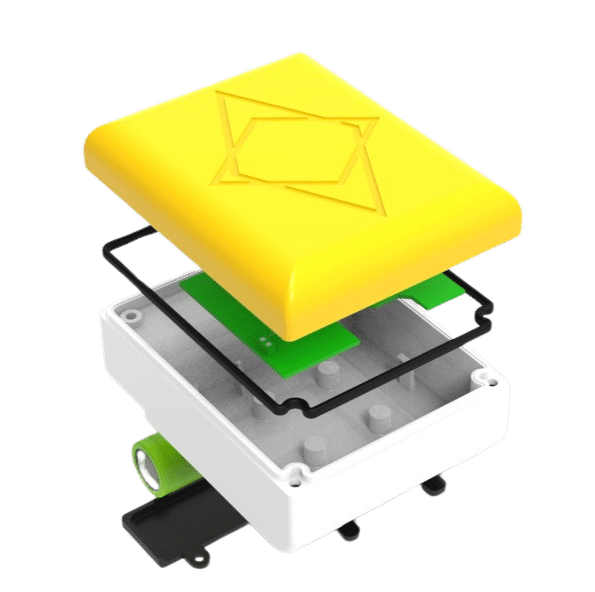
A UAE-based IoT startup needed a premium enclosure for a smart building sensor. With limited tooling budget and a tight timeline, we designed a two-part FR-ABS enclosure with silicone sealing and snap-fit locks. We produced 10 3D printed prototypes and made a manual mold for making first 100 components. After validation, production scaled to 5000 injection-molded units –  all within two months

The Future of IoT Hardware Design

In 2025, hardware success depends as much on design as it does on intelligence. According to Deloitte’s IoT Trends Report 2025, 73% of startups that invest in enclosure design reduce production costs and improve reliability. A great enclosure shortens assembly time, strengthens brand trust, and extends product life – that’s what Precious3D delivers.

💬 Ready to Build Your Custom Enclosures?

Whether you’re a startup creating your first IoT device or an established brand optimizing your product design, we can help.

👉 Let’s discuss your project.

Visit www.precious3d.com

 or email us at support@precious3d.com

 to get your enclosure designed and manufactured 

What is an IoT enclosure?

Why should I choose a custom enclosure over a standard one?

What materials work best for outdoor IoT devices?

How long does it take to go from design to prototype?

Can I start with low quantities?

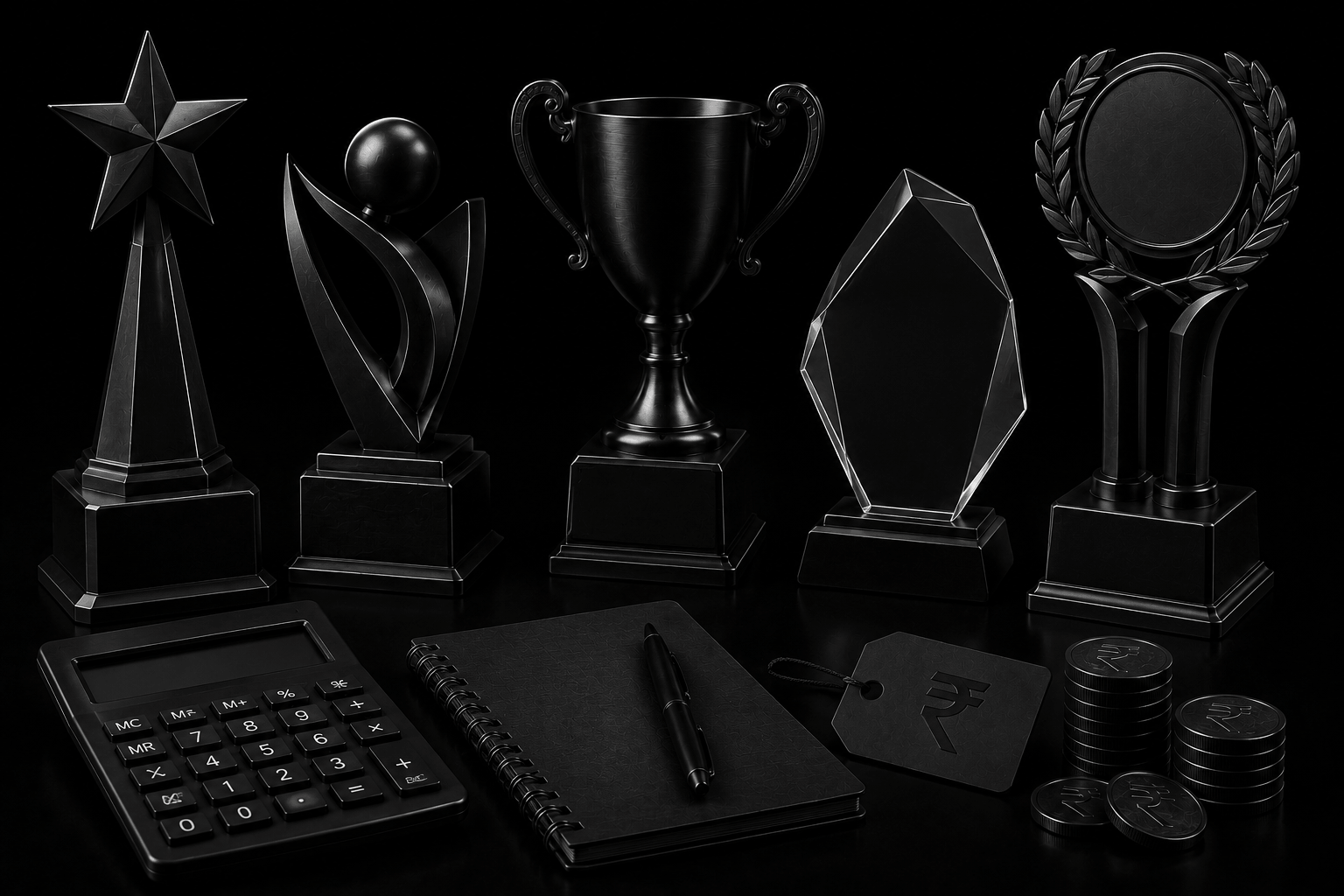
3D Trophies Cost in India: Pricing Guide 2025

How Much Do 3D Trophies Cost in India? (2025 Overview)

You want trophies that feel unique and on budget. This guide shows real price ranges in India, what drives cost, how long production takes, and where to buy. You also get two simple tables you can use for quick budgeting.

Quick stat: India’s 3D printing market was about USD 707 million in 2024 and is growing above 20% CAGR through the decade. Demand for custom awards benefits from this growth.

Short answer

You typically pay ₹700 to ₹1500 for small trophies, ₹1500 to ₹3500 for medium, ₹3500 to ₹9000 for large, and ₹10000+ for premium sculpted pieces. Bulk orders reduce unit cost by 25% to 40%

3D print pricing table

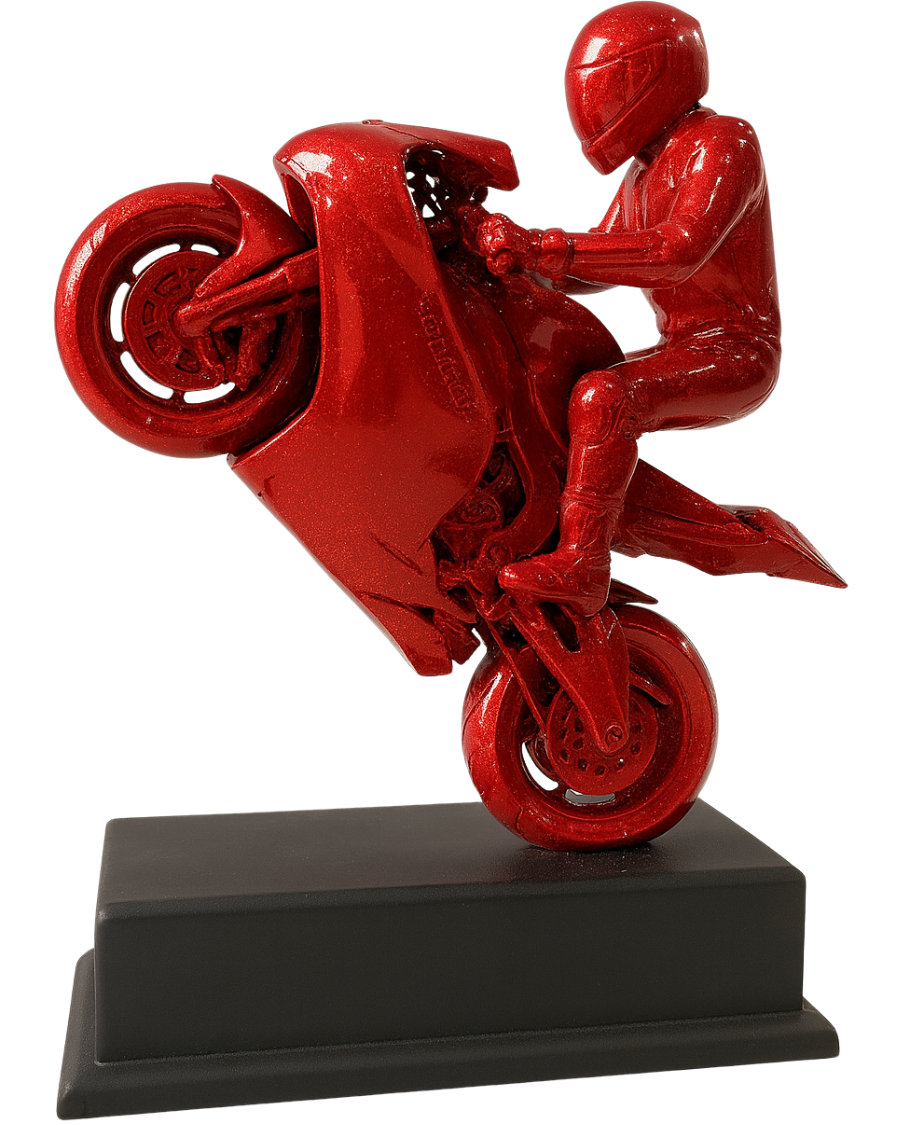
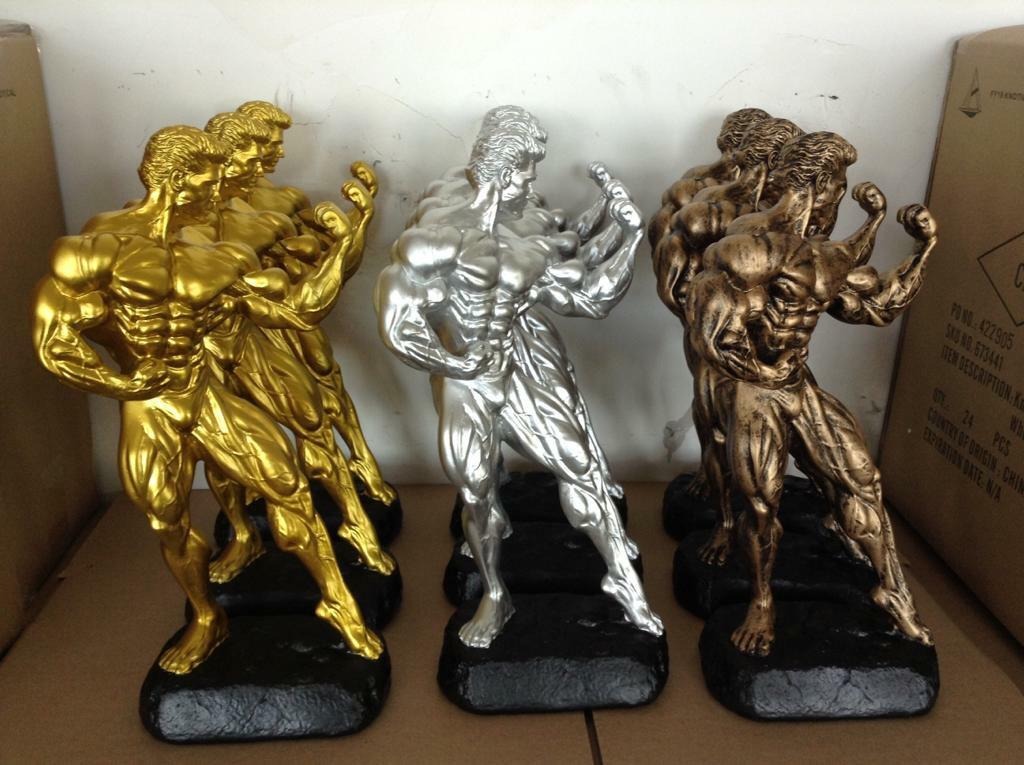
The cost of 3D printed trophies in India varies based on size, complexity, and finish. Unlike mass-produced metal or acrylic awards, 3D printed trophies are fully customizable allowing intricate designs, brand elements and unique shapes. Pricing typically depends on height, level of detail, material quality and timeline

Size

Typical height

Average price (INR)

Notes

Small
10 - 15cm (4-6inch)
700 - 1500 per piece
Budget events , small mementos
Medium
16 - 25cm (6 - 10inch)
1500 - 3500 per piece
Corporate events, Sports trophies
Large
26 - 35cm (10 - 14inch)
3500 - 7000 per piece
High visibility, stage trophies
Extra large
Above 35cm (above 14inch)
7000 +
Showpiece designs, mega events

What drives cost

Pick material for the look you want and the handling your trophy needs. FDM 3D printing is commonly used for budget trophies it has visible layer lines on surface. We generally use resin 3D printing to give a premium and smooth finish

PLA 3D printing

Layer lines visible on surface
Cheaper cost
Good for quick sampling

Resin 3D printing

Smooth surface finish
High and intricate detailing can be captured
Premium look and feel

Average pricing of trophies by Industries

Industry or nicheCommon styleAverage price per piece (INR)
School and college eventsSmall and colorful₹700 to ₹1,500
Corporate and HR recognitionMinimal resin with clean bases₹2,500 to ₹6,000
Esports and gamingCharacters and props₹3,000 to ₹9,000
Cultural and creative festivalsArt inspired forms₹3,500 to ₹12,000
Sports tournamentsDurable and easy to handle₹1,500 to ₹4,500
Brand activationsLogo or product shaped₹4,500 to ₹15,000
Government and institutional awardsPremium resin or metal-plated look₹9,000 to ₹25,000+

Example budget 

You need a 20 cm resin trophy in the shape of your logo. Order 30 pieces.

Design: ₹4,000 to ₹8,000

Unit cost: ₹1,800 to ₹2,600

Estimated total for 30: ₹58,000 to ₹86,000

Per unit including design: ₹1,933 to ₹2,867.

Lead times in India

Prototype: 2 to 5 working days including design

Bulk after approval: 7 to 15 days

Large or complex batches: 20 to 30 days

3D printed trophy vs ready made trophy

Feature3D printed trophiesReady-made trophies
Custom shapeFull freedomLimited
Brand integrationBuilt into formSticker or plate
Cost for small batchesEfficientLow but less unique
Emotional valueHighLow to medium

Best place to buy in India 

Precious3D — https://precious3d.com

Helpful internal links 

3D printing services — https://precious3d.com/services

Custom trophy gallery — https://precious3d.com/gallery

Bulk order enquiry — https://precious3d.com/contact

How long do 3D trophies last?

Can you add names on each piece?

Do colors change the price?

Is PLA eco-friendly?

What is a realistic timeline?

Will reorders cost less?

The Vacuum Casting Process: Reasons To Choose It

vacuum casting process

The vacuum casting process is a copying technique or a casting process which is used for the production of small series of functional materials usually plastic, rubber and metals. Moreover, this method helps in producing exact replicas of a prototype on a large scale. Core and cavity extraction is done manually. Equivalent material to the end material is poured under vacuum so as to produce the component. Ideally, a silicone mold can produce up to 20 good replicas but again the capability may vary as per the design complexity & quality acceptance. The parts produced in this process are functional and with excellent aesthetics. This process is suggested when multiple functional prototypes are required within a short timeline at low cost.

vacuum casting process

The Vacuum Casting Process

Why choose the Vacuum Casting Process?

The vacuum casting process results in high-quality products as compared to injection molded components. Vacuum casted models are usually used for functioning testing and marketing purposes. The end product has such good finishing that this technique has attracted a large set of the audience towards it. The type of finishing which vacuum casting does cannot be matched with any other technique.

vacuum casting process

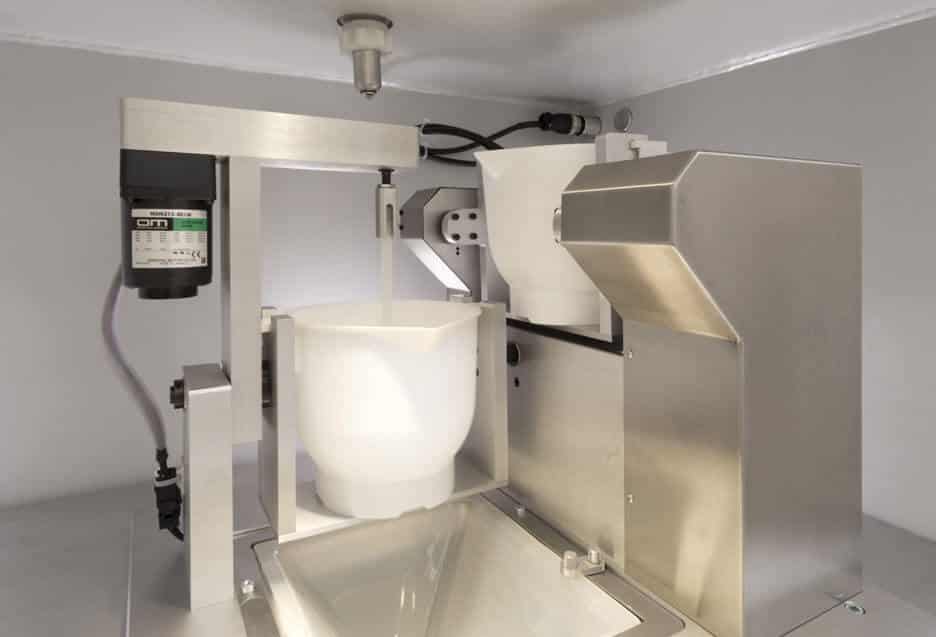
The vacuum casting prototype machine

Applications of the vacuum casting process

  • The vacuum casting process can be used for testing a product before launching it in the market.
  • This method can be chosen if you want a fast delivery production.
  • This method can be opted for producing cost-effective low volume production.
  • It can be used to build models and prototypes
  • It can be used to build a prototype of any size.

What is special about ‘Precious 3D’?

We at ‘Precious 3D’ provide the manufacturing of your prototypes in the following materials:

  • ABS Plastic
  • Strong Nylon
  • Carbon Fibre
  • Poly Carbonate
  • Industrial Metals
  • Detail Resin
  • Flex Rubber

Usually, people do not choose vacuum casting over injection molding due to its potentially high cost and time-consuming quality but choosing ‘Precious 3D’ over other companies for vacuum casting process would be one of the best decision of your life. Do you want to know why? Well, we cut the cost by 80 percent than what other 3d printing companies provide and come up with the best quality finished product. Not only that, we assure you the fastest delivery rate. Your product would be delivered to you within 5-6 days whereas most of the 3d printing companies take around 20-22 days to deliver it to you.

That is how we differentiate us from others in this industry of 3d printing. Just put your trust in us and rest is our responsibility. We won’t let you down.  Your happiness is our first priority. You imagine we create that is how we work.

3d printing technology: The Cost-Effective 3d printing technology

3d printing technology

It is impossible to believe what all changes the 3d printing technology has brought to our lives. From witnessing a dress being 3d printed to pieces of beautiful jewelry being printed; the human eyes have been lucky enough to watch all the tremendous transitions happening in the printing industry. Let’s wind our watches, rewind time and take the instance of say around 50 years from hence. To a time when there was not even the slightest clue that technology would someday make such a huge transformation that there would be printers out of which dresses, shoes, jewelry, etc would come out rather than just paper.

To a time when our technology was so back forward that our ancestors couldn’t even imagine in the wildest of their dreams that one-day humankind would develop so much that they would produce machines which could make virtual products look like real to a very large extent. Taking into account the progress of additive manufacturing in the field of printing, we may observe that it has become one of those industries which have seen the most advancement in their field of work.

3d printing technology

The 3d printing technology also known as additive manufacturing is a digital manufacturing process which involves the printing of three-dimensional objects using the layer by layer processing with the help of a variety of ceramics, metals, and polymers. It takes digital files and turns them into reality by creating a realistic physical part. This method of manufacturing has proved its worth by winning the trust of thousands of people with its high-quality final products.

How has this method of manufacturing proved as a game changer?

  • Just like the name goes ‘Additive manufacturing’ does not lead to the subtraction of the product material instead it involves a layering process in which the material is laid layer by layer until the desired object is obtained.
  • From rapid prototyping to finished products to self-replicating machines; 3d printing is the solution.
  •  Manufacturing speed is faster than what other manufacturing industries assure.
  • It can produce just about anything; from a keychain to spare parts of an automobile. Anything is possible via 3d printing.

Is 3d printing technology affordable?

Additive manufacturing cuts down the cost of the product and is affordable for normal people because of the following reasons:

Labor costs

It just requires a press of a button and putting in information the customer wants. Since the whole process is          almost fully automatic it cuts the labor costs meant for the product

A huge boon for the Medical Industry

It does not add to the cost of surgery which in turn brings down costs in terms of operation time, failed surgery cost and other expenses.

No added cost for complexity

Price increases with complexity in the traditional method of manufacturing. It is not the case with 3d printing,           which creates an entire piece in one process, instead of creating each component before assembling.

Make it just how you want it to be

You can design your own product without any additional cost because we believe you know the best.

Advances

3d printing service have advanced so much with the passage of time that now it can print about anything; literally anything. Though it has not reached a level where it can compete with the traditional means of manufacturing but it has become capable enough to stand strong as a single industry of manufacturing. Human nature has always promoted creativeness and uniqueness; both these qualities combined together have given birth to a new and innovative print industry – The 3d printing industry. Do you want the heart-shaped or any personalized chocolates for Valentine’s Day coming up? Well, 3d printing is the solution for you. The latest discovery of chocolate ink will come to your rescue. The process is similar to a chef pushing cream or custard through a spout to make a fancy design, except the machine, repeats this process over and over, and it is much more accurate.

Additive manufacturing has achieved huge heights of success and the day is not quite far when it would become difficult for the human eyes to differentiate between what is natural and what is manmade (3d printed).

Looking ahead in the future, the 3d printing technology undoubtedly is going to change the way we look at things. It is going to give a tough competition to all the other industry segments with its improvement in product quality and techniques.

Read more:

3d Printed Ship Propeller Completed In Netherlands

3d Printed Building In Dubai

3d Printing Service Cost: Benefit To Companies By Cost Reduction In 3d Printing

3d printing service cost

3d Printing Service Cost

The implications of emerging technologies such as 3d printing on the industrial manufacturing market are often hotly debated. Some experts in the industry feel that it will be hugely disruptive, while others believe the technology is decades away from viability. Forecasts project significant growth in the industry over the next five years. As stated by the website On 3d printing, “The 3d printing industry is expected to change nearly every industry it touches, completely disrupting the traditional manufacturing process. As a result, the projected value of the industry is
expected to explode in the near future.”

In fact, On 3d printing projects that the market for 3d printing technology itself is expected to grow to $5.2 billion by 2020. As the market grows and the cost of printers falls, it is likely to give rise to new competitors in traditional markets. Moreover, it leads to spur of innovative new products, as prototypes for new products will become significantly less expensive and less risky to fabricate. Yet product development and the competitive environment are just two of the potential implications. This emerging technology is also likely to have a significant impact on how manufacturers do business, specifically as it relates to shifts in material cost, incremental-cost calculations, and traditional assembly line and product pricing strategies.

3d Printing Service Cost: Material Cost Savings

3d printing service cost

3d printing technology has the potential to make the manufacturing process options infinite and extremely precise. For example, today, using what’s known as“subtractive process,”if you want apart made out of aluminum, a block is placed into a CAD system and the excess material is cut away to make the part. Using this process, approximately 60 to 70 percent of the aluminum block ends up as scrap depending on the complexity and shape needed. The scrap is later melted down and reused for future manufacturing needs. By contrast, 3d printing technology is “additive,” and manufacturers are able to use the minimum material needed to fabricate a part.

In the example above, using a 3d printer could essentially eliminate the process of melting down excess scrap material and wasted resources, ultimately driving down total material costs for the manufacturer. As a result, the 3d printing service cost gets reduced to a great extent. For the manufacturing industry in general, this could significantly reduce capital tied up in raw materials and costs to reclaim scrap.

Improvement to incremental cost calculations

While the initial cost of a 3d printer could be upwards of a million dollars, the technology has the potential to substantially reduce incremental unit costs for a manufacturer. There is a considerable chance that a part made on a 3d printer could cost far less than one completed through traditional manufacturing processes. Eventually, the industry may reach a tipping point where the fully allocated 3d printing service cost will fall well below the traditional manufacturing process—even with the upfront investment in the printers themselves. If that’s the case, then it is likely we will see a complete shift in the way industrial manufacturing is done.

Assembly line and pricing strategy transformation

During the manufacturing process, sales teams must work very closely with the production teams to make sure all delivery dates are met and the customer is kept happy from point of sale through production and delivery. In a traditional assembly line process for engineered-to-order products, for instance, the tools and material must be changed out for each individual job and reprogrammed for each customer and product.

Advantages of 3d printing

3d printing service cost

With 3d printing, the production team is given greater flexibility since assembly is a single operation and set up time is reduced to nearly zero. Due to flexibility in this new assembly line process, sales reps would be able to push orders through faster and in a greater capacity, since they are fulfilled almost immediately without waiting for optimal production windows which can accommodate the particular tooling or a material used for each order. Additionally, the manufacturing process can be done at a lower cost and every order can be treated like a rush order with shorter production time. On the other hand, shorter production time and lower overhead costs to the manufacturer doesn’t mean that companies will no longer be able to collect value out of a strategic pricing process. The low 3d printing service cost increases its value in the market.

Companies may still be able to charge the same price and even enjoy an increased margin rate due to the specificity and uniqueness of products available via 3d printing processes. Because the manufacturers’ costs are less, they can decide how much of that cost savings to pass along as a price reduction to customers in order to secure business. And,  keep it out of the hands of competition, or how much to keep in their pockets as increased profits. For now, the impact of 3d printing on industrial manufacturing is merely a theory. But, manufacturers who choose to ignore the benefits and transformation associated with this technology risk falling prey to those that embrace it.

The future

3d printing continues to evolve at a rapid pace and each day we’re seeing something new created from it. What started as fabrication of plastic screws and small parts made of glass has turned into full manufacturing of complete end-products. Now, it includes working automobiles and even buildings have been 3d printed in a single manufacturing action. This proves that the possibilities of 3d printing technology are endless for manufacturers.

Read more:

3d Printing Sand Casting: Lowering Sand Casting Production Cost Using 3d Printing

3d Printed Statues: Restoring History Using 3d Printing

3d Printed Ship Propeller Completed In Netherlands

3d printed ship propeller

Over the past few years, we’ve seen 3d printing gradually taking over significant parts of manufacturing processes across the automotive and aerospace industries. And now, the ship-building the industry is starting to take advantage of what the technology has to offer. After some trials and prototypes, the first fully 3d printed ship propeller has been approved for use. It is completed by a team of engineers in the Netherlands. Known as the Sampler, it was unveiled at the Damen Shipyard Group’s headquarters in Gorinchem, in the south of the country.

3d printed ship propeller

This groundbreaking project was made possible by close collaborative work between defence and shipbuilding conglomerate Damen Group, propeller manufacturing expert Promarin, the Port of Rotterdam’s RAMLAB (Rotterdam Additive Manufacturing LAB) and Autodesk. Bureau Veritas was involved at the testing stage, putting the 3d printed ship propeller through rigorous trials to verify its suitability for purpose.

How was the 3d printed ship propeller manufactured?

3d printed ship propeller

The companies began pooling their collective resources and knowledge around seven months ago. Promarin provided the initial design for the triple-blade propeller. RAMLAB oversaw the main manufacturing stage, fabricated the piece using innovative Wire Arc Additive Manufacturing (WAAM) techniques. This was supported by Autodesk’s expertise in software, robotics and, additive manufacturing. Damen provided one of its vessels from the
Stan Tug 1606 range to help with testing the propeller, as well as contributing crucial research and development expertise.

August of 2017 saw the successful completion of the first Sampler prototype. It gave the team a significant confidence boost and the ability to move forward with a lot fewer uncertainties. According to Vincent Wegener, Managing Director of RAMLAB, “Production of the second Sampler was greatly improved because we had learned a lot from producing the prototype. This mainly concerned the hardware/software interaction because, when laying
down 298 layers of Nickel Aluminium Bronze alloy, it is important to have a tight control on all process parameters.”

The second 3d printed ship propeller prototype

3d printed ship propeller

The second prototype of 3d printed ship propeller, after completion, was installed on a Stan Tug 1606. Its purpose was to see how it would fare in real-world seafaring conditions. Such tests of ship components are extensive as the parts must comply with the strict environmental rules and regulations. Also, the part must perform at an elevated level in terms of speed and crash stop scenarios. In crash stop scenarios, the ship goes from full throttle ahead to full throttle reverse. That exerts a large amount of force on the propeller.

“Of course, we were all a bit nervous beforehand – after all, innovation always comes with a certain number of unknowns – but the testing was a success,” said Kees Custers, Damen Project Engineer R&D enthusiastically. “From day one, this project has been characterized by a good working atmosphere and team dynamics, so there were quite a few high-fives on board when we had successfully completed the tests!”

3d printed ship propeller

RAM Lab itself has only opened just over a year ago. The success of this project points to a promising future for 3d printing technology in the maritime sector. According to RAM Lab CEO Allard Castelein, “This project has shown the shipbuilding industry the potential of 3d printing techniques to produce vessel components. We continue our intensive research into this very exciting area.”

Read more:

3d Printing Business: How Is 3d Printing Changing The Life Of Entrepreneurs?

3d Printing In Orthodontics: Transforming Dentistry

3d Printing Sand Casting: Lowering Sand Casting Production Cost Using 3d Printing

3d printing sand casting

3d Printing Sand Casting

Sand casting is the age-old process in which casting of metal is done using a mold made of sand. It is the most economical and efficient way of producing metal patterns. This technique is basically used by primary manufacturers,  consisting of small pattern shops and foundries.The process is quite simple to follow and can be used by anyone, even by students. The process includes the making of a mold by using various patterns and layout. The molten material is then poured into the mold, left to cool and solidify. Then, the solid sand mold is removed and the metal item is ready for further processing.

Now the question arises if the sand casting is an efficient method, why move on to 3d printing industry?

The answer lies in the very approach to the 3d printing.

The 3d printing industry can eliminate the very problems the industry currently faces.

Benefits of 3d printing sand casting

  1. In the conventional approach, a manufacturer had to wait till a mold was formed to cast the metal piece. 3d printing would specialize in outsourcing in-house.
  2. The execution time will decrease, increasing efficiency.
  3. The patterns used now are manufactured manually leaving room for error, which can be eliminated by using 3d printing.
  4. A quick modification of patterns can be done easily, which was not possible if conventional mold-making is considered.
  5. It can reduce manufacturing costs up to 60% of what is now incurred.
  6. The materials used are acrylonitrile butadiene styrene(ABS) which are way stronger than those from CNC molds used now.
  7. High degree of flexibility can be achieved, ranging from the design of molds to the size of the batch.
  8. It also reduces the storage space required to store additional tools for repair and maintenance.
  9. It promotes Toolless engineering.
  10. Complex designs can be cast directly rather than producing different parts and joining them together, reducing delivery time.

3d printing sand casting

Why use 3d printing sand casting?

The usage of 3d printing in sand casting can be beneficial, in the correct circumstances.

It is particularly beneficial if used within low to medium level of production, for example, say 5000 parts. The complex designing process is automated which provides accuracy and reduced execution time. Last, but not the least, the mold should be compatible with the printer, its size must be bigger than the printer, otherwise, problems might occur.

Since time is money, and there is no possible way to ignore the level of productivity with time, keeping all the above factors in mind, the 3d printing is a far superior alternative to the conventional sand casting process.

It should be that due to the advent of 3d printing, conventional sand casting is not used. It should be kept in mind, that 3d printing can be combined with the conventional process at will, thus innovation can occur hand in hand with technology and knowledge.

Read more:

3d Printing Business: How Is 3d Printing Changing The Life Of Entrepreneurs?

3d Printed Statues: Restoring History Using 3d Printing

Advances In 3d Printing: Innovations And Potential For Future Growth

advances in 3d printing

The young 3d printing industry has started to revolutionize every sphere of life. Owing to lower costs, higher accuracy, high execution time, availability of new materials and faster, portable applications, new techniques, and innovations are enriching the industry worldwide. It has entered each and every sphere of our life and some of the innovations are overwhelming, the picture showing what our existing world can become. There have been many advances in 3d printing since its inception. Some major advances in 3d printing are discussed below.

Major advances in 3d printing

Defense

advances in 3d printing

The biggest example, to witness the advances in 3d printing, is the defense sector. 3d printing is making waves in the defense industry, it demands precise design within the stipulated time, and more prototypes are required for mockups, at a low cost. The U.S. Government has started developing FDM system using 3d printing. The Tiberius fully made with 3d printing, is being commissioned in U.S. army.

Housing and architecture

3d printing is now being used to build houses, yes you read it correctly. The Chinese construction company WinSun Decoration Design Engineering has done this impossible feat by printing 10 houses in one day. It has now gone on to print an entire 5-story apartment building and a standalone villa. The aim is to be able to construct homes at affordable prices for the Chinese market. The smaller houses cost just around €4,500 ($5,000) to produce. The most popular project is the 3d Print Canal House in Amsterdam which was done by a 3d printer.

advances in 3d printing

3d print canal house

The first pedestrian bridge was inaugurated 14th of December of 2016 in the urban park of Castilla-La Mancha in Alcobendas, Madrid. The 3DBUILD technology used was developed by ACCIONA.

Consumer

The objectives of aesthetic testing, a creation of lifelike prototypes and use of different materials made 3d printing into. 3d printing is being used extensively for making electronic goods, such as motherboards of laptops, the drones and also in Robotics.

Fashion

Cuddly teddy bears straight off the printer? The Disney Research Team in the United States has found a way to print in wool, meaning that alongside hard, precise objects, this new technology can now also be used to create things that are soft and squeezable. The printer builds up the yarn in layers, producing a unified mass that looks and feels like felt. In collaboration with a team from Carnegie Mellon University’s Human-Computer Interaction Institute in Pennsylvania, USA, they even printed a move-able teddy bear arm.

Biomedicine

advances in 3d printing

While 3d printing is already widely used in dentistry to print teeth and parts of jawbones, In the first clinical trial of its kind, a team at University College London has been carrying out tests and is months away from implanting the printed ears into patients. The team is also working on printed noses, tracheae, tear ducts or blood vessels. It is a cost-effective solution and can be personalized with the requirements of a person. 3d printing has made people with standing difficulties, walk for the first time.

Aircraft designing

advances in 3d printing

3d printing is also being used extensively in aircraft designing. Airbus, a leading aircraft manufacturer, is already using a variety of 3d printed plastic and metal brackets in its fleet of developmental aircraft. Airbus estimates 3d printing could reduce its raw material costs by up to 90% as it reduces the need for raw materials and carbon footprint.

Metallurgy

advances in 3d printing

3d printing in metal is pricey. But Argentinian engineer Gastón Accardi has come up with a metal printer that cost him less than €2 to make. Essentially a marker filled with a copper acid solution, it uses the concept of electroplating to build up 3d objects layer by layer in different types of metal. Although still a little slow, the machine could one day be a boost to small businesses.

Automotive industry

In 2014, Local Motors printed the first 3d-printed car from an ABS carbon-fiber blend (about 80/20 respectively) called Strati. Today, the company has three models and an autonomous electric-powered shuttle named Olli. In addition, Honda released a new version of the Micro-Commuter in October at CEATEC 2016 in Japan. A single-seater with about a 50-mile driving range, the body and majority of the panels on the Micro-Commuter are 3d printed. In early 2014, Swedish supercar manufacturer Koenigsegg announced the One; a supercar that utilizes many components that were 3d printed. The One has side-mirror internals, air ducts, titanium exhaust components, and complete turbocharger assemblies that were 3d printed as part of the manufacturing process.

Urbee is the name of the first car in the world car mounted using the technology 3d printing (its bodywork and car windows were “printed”). Created in 2010 through the partnership between the US engineering group Kor Ecologic and the company Stratasys (manufacturer of printers Stratasys 3d), it is a hybrid vehicle with a futuristic look.

Food industry

advances in 3d printing

Italian food producer, Barilla, is using 3d printing for custom pasta production. A German nursing home uses a 3d printer to create a food product called Smooth foods. It is a concoction of mashed peas, carrot, and broccoli. This tasty dish is then congealed with edible glue and served to elderly residents who face difficulties in chewing.

Oil and gas industry

advances in 3d printing

The 3d printing is also making way into oil and gas industry. It has a possibility to reduce transportation costs, storage costs and decrease the cost of drilling oil. General Electronics has started making nozzles using 3d. Gartner predicts that 10% of gas companies will use AM in the production of parts by 2019.

Future growth of the industry

advances in 3d printing

The advances in 3d printing prove that this industry is touted to increase at a phenomenal rate.

advances in 3d printing

According to the market research report “3d Printing Market by Offering (Printer, Material, Software, Service), Process (Binder Jetting, Direct Energy Deposition, Material Extrusion, Material Jetting, Powder Bed Fusion), Application, Vertical, and Geography-Global Forecast to 2023”, the 3d printing market is expected to be worth USD 32.78 Billion by 2023, at a CAGR of 25.76% between 2017 and 2023.

Read more:

3d Printing In Orthodontics: Transforming Dentistry

Future Of 3d Printing In India

3d Printing Business: How is 3d Printing Changing The Life Of Entrepreneurs?

3d printing business

3d printing business: Ways 3d printing is changing the way we do business

3d printing has loomed on the horizon for many years. Only now has the technology advanced to such an extent that we can confidently say it is becoming a practical part of the way businesses operate today. APWC survey revealed that 11% of manufacturing companies had already started to mass produce 3d printed parts. In addition, as quality continues to increase, 3d printing will continue to change the way we do business. Therefore, it is apparent that the 3d printing business is going to increase in future.

This article will investigate how 3d printing will change a variety of businesses. Products Coming to Market Faster: What a lot of people don’t know is that 3d printing has been used to create prototypes for over 20 years. However, this took time and three or four design cycles could take months. It meant new products took almost a year to actually make it to market.

Companies like UPS, have entered the arena and with same-day production and same-day delivery, design concepts that took months to build can happen in a matter of days. According to CGTrader.com,”3d printing has and will continue to open up truly rapid prototyping, enabling customers to get the products they crave faster.” From a business point of view, this forces everyone to move faster than ever before. Bigger companies that can afford this technology now have a distinct advantage, and smaller companies are either going to have to invest or fall.

Added Opportunities for Entrepreneurs in 3d printing business

The speed and increasing cost-effectiveness of 3d printing are providing massive opportunities for entrepreneurs. One of the reasons for this is simply due to how many industries 3d printing can touch. Entrepreneurs have always had the disadvantage of taking time to produce a prototype investor can look at. This is also extremely expensive so it meant many entrepreneurs could take years to actually begin raising money. The increasing accessibility of 3d printing will change the way we do business by opening up more chances for entrepreneurs to enter markets that were previously difficult to enter.

Will this mean additional innovation in 3d printing business?

There is a good chance this is exactly what it will mean. Entrepreneurs will able to test more and be more daring.In the long-term, it could lead to faster innovations in a range of industries, including jewelry and surgical prosthetics.

A Boost for Small Businesses

Small businesses have a number of problems unique to them, particularly in the manufacturing industry. They lack the space needed for heavy machinery and storage. Also, they lack the funds for the latest innovations. They lack the time to produce a range of products. Most of the time, it is a matter of relying on that one great idea. 3d printing will change this. This technology can produce the same parts as other types of heavy machinery. The catch is it takes up a fraction of the space and costs but a fraction of the original price.

Small businesses will find that while they have no choice but to embrace the 3d printing revolution when they do they will be on better terms with their larger competitors. 3d printing will give the same benefits to a small company as it will a large company. 3d printing, once it becomes the norm, could start an era of rapid growth for small businesses. Increasingly, the business world will see small companies evolving into medium and large-sized organizations.

Should big companies be worried?

While this is certainly not a reason for big companies to begin worrying about competition, they should keep looking over their shoulders. No longer will be producing the same products with minor changes be acceptable. They will have to do more in order to continue to secure their dominance.

It is clear that 3d printing is set to change the world in many ways. Nowhere will this become more apparent than in business.For now, 3d printing will continue to improve. It will be a few years before it becomes the norm. However, companies that decide to act now will have a distinct advantage over their competitors. They will find that they have a lot to gain by opting for early 3d printing optimization. Additionally, it could lead to big things going forward for them.

Read more:

3d Printed Statues: Restoring History Using 3d Printing

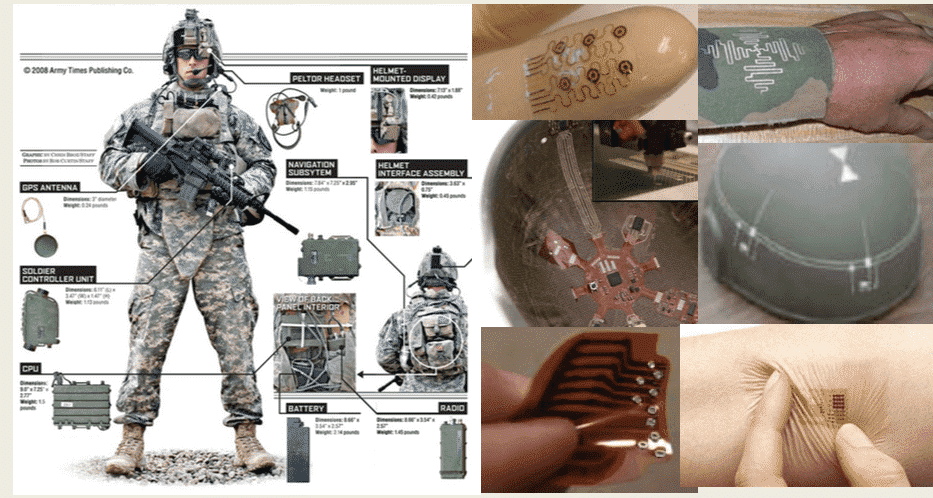
3d Printed Circuit Board: 3d Printing In Electronics Industry

3d Printing in Orthodontics: Transforming dentistry

3d printing in orthodontics

3d printing is one of the greatest technology invented that is shaping the future of manufacturing industry. It has a great impact on the manufacturing sector since past many years. In recent times, 3d printing has made its mark in the medical field.  Orthodontics is one among them, which is going to experience a huge transition with the advent of 3d printing. 3d printing in orthodontics will transform it to a great extent. Ranging from dental implants to teeth restorations wide variety of things can be optimized using the 3d printing technology.

3d printing in orthodontics

Objet260 3d Printer by Stratasys

Stratasys has unveiled Object OrthoDesk 3d Printer to 3d print surgical guides which help doctors to perform with freedom and identify beforehand the defect areas which in turn is a great advancement for minor error surgery.  Also, dental implants are being made with the help of this technology creating precise structures with a fine texture which is being considered as a great alternative for the traditionally manufactured one. Using technologies like stereolithography, dental materials with temperature resistant properties can be created. Which in turn improves the quality and life of the implant that is being imparted to the patient.

Advantages of 3d printing in orthodontics

3d printing in orthodontics

3d printed orthodontic model

The 3d printing in orthodontics is also used for creating teeth protectors that are transparent; Also, keeping in mind that the strength and durability of the product are on point.  Dental Medicine research is being conducted in leading universities using Laser Polymerization techniques to develop high-quality materials with improved characteristics. Digital manufacturing and 3d printing are changing the workflow and practice of Dentists and Dental Technicians.

Through these advancements, the process and practice have become easy and has led to significant increase in success rates. Everyday new research is being carried out in 3d printing field for the advancement not only in dentistry but also in the medical field in general.  3d printing still has a lot of potentials that can be implemented for the betterment of the healthcare industry.

Read more:

Nanotechnology And 3d Printing

3d Printed Lens: 3d Printed Camera Lens