All Posts By

Chinmay Rathi

3d Printed Ship Propeller Completed In Netherlands

3d printed ship propeller

Over the past few years, we’ve seen 3d printing gradually taking over significant parts of manufacturing processes across the automotive and aerospace industries. And now, the ship-building the industry is starting to take advantage of what the technology has to offer. After some trials and prototypes, the first fully 3d printed ship propeller has been approved for use. It is completed by a team of engineers in the Netherlands. Known as the Sampler, it was unveiled at the Damen Shipyard Group’s headquarters in Gorinchem, in the south of the country.

3d printed ship propeller

This groundbreaking project was made possible by close collaborative work between defence and shipbuilding conglomerate Damen Group, propeller manufacturing expert Promarin, the Port of Rotterdam’s RAMLAB (Rotterdam Additive Manufacturing LAB) and Autodesk. Bureau Veritas was involved at the testing stage, putting the 3d printed ship propeller through rigorous trials to verify its suitability for purpose.

How was the 3d printed ship propeller manufactured?

3d printed ship propeller

The companies began pooling their collective resources and knowledge around seven months ago. Promarin provided the initial design for the triple-blade propeller. RAMLAB oversaw the main manufacturing stage, fabricated the piece using innovative Wire Arc Additive Manufacturing (WAAM) techniques. This was supported by Autodesk’s expertise in software, robotics and, additive manufacturing. Damen provided one of its vessels from the
Stan Tug 1606 range to help with testing the propeller, as well as contributing crucial research and development expertise.

August of 2017 saw the successful completion of the first Sampler prototype. It gave the team a significant confidence boost and the ability to move forward with a lot fewer uncertainties. According to Vincent Wegener, Managing Director of RAMLAB, “Production of the second Sampler was greatly improved because we had learned a lot from producing the prototype. This mainly concerned the hardware/software interaction because, when laying
down 298 layers of Nickel Aluminium Bronze alloy, it is important to have a tight control on all process parameters.”

The second 3d printed ship propeller prototype

3d printed ship propeller

The second prototype of 3d printed ship propeller, after completion, was installed on a Stan Tug 1606. Its purpose was to see how it would fare in real-world seafaring conditions. Such tests of ship components are extensive as the parts must comply with the strict environmental rules and regulations. Also, the part must perform at an elevated level in terms of speed and crash stop scenarios. In crash stop scenarios, the ship goes from full throttle ahead to full throttle reverse. That exerts a large amount of force on the propeller.

“Of course, we were all a bit nervous beforehand – after all, innovation always comes with a certain number of unknowns – but the testing was a success,” said Kees Custers, Damen Project Engineer R&D enthusiastically. “From day one, this project has been characterized by a good working atmosphere and team dynamics, so there were quite a few high-fives on board when we had successfully completed the tests!”

3d printed ship propeller

RAM Lab itself has only opened just over a year ago. The success of this project points to a promising future for 3d printing technology in the maritime sector. According to RAM Lab CEO Allard Castelein, “This project has shown the shipbuilding industry the potential of 3d printing techniques to produce vessel components. We continue our intensive research into this very exciting area.”

Read more:

3d Printing Business: How Is 3d Printing Changing The Life Of Entrepreneurs?

3d Printing In Orthodontics: Transforming Dentistry

3d Printing Sand Casting: Lowering Sand Casting Production Cost Using 3d Printing

3d printing sand casting

3d Printing Sand Casting

Sand casting is the age-old process in which casting of metal is done using a mold made of sand. It is the most economical and efficient way of producing metal patterns. This technique is basically used by primary manufacturers,  consisting of small pattern shops and foundries.The process is quite simple to follow and can be used by anyone, even by students. The process includes the making of a mold by using various patterns and layout. The molten material is then poured into the mold, left to cool and solidify. Then, the solid sand mold is removed and the metal item is ready for further processing.

Now the question arises if the sand casting is an efficient method, why move on to 3d printing industry?

The answer lies in the very approach to the 3d printing.

The 3d printing industry can eliminate the very problems the industry currently faces.

Benefits of 3d printing sand casting

  1. In the conventional approach, a manufacturer had to wait till a mold was formed to cast the metal piece. 3d printing would specialize in outsourcing in-house.
  2. The execution time will decrease, increasing efficiency.
  3. The patterns used now are manufactured manually leaving room for error, which can be eliminated by using 3d printing.
  4. A quick modification of patterns can be done easily, which was not possible if conventional mold-making is considered.
  5. It can reduce manufacturing costs up to 60% of what is now incurred.
  6. The materials used are acrylonitrile butadiene styrene(ABS) which are way stronger than those from CNC molds used now.
  7. High degree of flexibility can be achieved, ranging from the design of molds to the size of the batch.
  8. It also reduces the storage space required to store additional tools for repair and maintenance.
  9. It promotes Toolless engineering.
  10. Complex designs can be cast directly rather than producing different parts and joining them together, reducing delivery time.

3d printing sand casting

Why use 3d printing sand casting?

The usage of 3d printing in sand casting can be beneficial, in the correct circumstances.

It is particularly beneficial if used within low to medium level of production, for example, say 5000 parts. The complex designing process is automated which provides accuracy and reduced execution time. Last, but not the least, the mold should be compatible with the printer, its size must be bigger than the printer, otherwise, problems might occur.

Since time is money, and there is no possible way to ignore the level of productivity with time, keeping all the above factors in mind, the 3d printing is a far superior alternative to the conventional sand casting process.

It should be that due to the advent of 3d printing, conventional sand casting is not used. It should be kept in mind, that 3d printing can be combined with the conventional process at will, thus innovation can occur hand in hand with technology and knowledge.

Read more:

3d Printing Business: How Is 3d Printing Changing The Life Of Entrepreneurs?

3d Printed Statues: Restoring History Using 3d Printing

Advances In 3d Printing: Innovations And Potential For Future Growth

advances in 3d printing

The young 3d printing industry has started to revolutionize every sphere of life. Owing to lower costs, higher accuracy, high execution time, availability of new materials and faster, portable applications, new techniques, and innovations are enriching the industry worldwide. It has entered each and every sphere of our life and some of the innovations are overwhelming, the picture showing what our existing world can become. There have been many advances in 3d printing since its inception. Some major advances in 3d printing are discussed below.

Major advances in 3d printing

Defense

advances in 3d printing

The biggest example, to witness the advances in 3d printing, is the defense sector. 3d printing is making waves in the defense industry, it demands precise design within the stipulated time, and more prototypes are required for mockups, at a low cost. The U.S. Government has started developing FDM system using 3d printing. The Tiberius fully made with 3d printing, is being commissioned in U.S. army.

Housing and architecture

3d printing is now being used to build houses, yes you read it correctly. The Chinese construction company WinSun Decoration Design Engineering has done this impossible feat by printing 10 houses in one day. It has now gone on to print an entire 5-story apartment building and a standalone villa. The aim is to be able to construct homes at affordable prices for the Chinese market. The smaller houses cost just around €4,500 ($5,000) to produce. The most popular project is the 3d Print Canal House in Amsterdam which was done by a 3d printer.

advances in 3d printing

3d print canal house

The first pedestrian bridge was inaugurated 14th of December of 2016 in the urban park of Castilla-La Mancha in Alcobendas, Madrid. The 3DBUILD technology used was developed by ACCIONA.

Consumer

The objectives of aesthetic testing, a creation of lifelike prototypes and use of different materials made 3d printing into. 3d printing is being used extensively for making electronic goods, such as motherboards of laptops, the drones and also in Robotics.

Fashion

Cuddly teddy bears straight off the printer? The Disney Research Team in the United States has found a way to print in wool, meaning that alongside hard, precise objects, this new technology can now also be used to create things that are soft and squeezable. The printer builds up the yarn in layers, producing a unified mass that looks and feels like felt. In collaboration with a team from Carnegie Mellon University’s Human-Computer Interaction Institute in Pennsylvania, USA, they even printed a move-able teddy bear arm.

Biomedicine

advances in 3d printing

While 3d printing is already widely used in dentistry to print teeth and parts of jawbones, In the first clinical trial of its kind, a team at University College London has been carrying out tests and is months away from implanting the printed ears into patients. The team is also working on printed noses, tracheae, tear ducts or blood vessels. It is a cost-effective solution and can be personalized with the requirements of a person. 3d printing has made people with standing difficulties, walk for the first time.

Aircraft designing

advances in 3d printing

3d printing is also being used extensively in aircraft designing. Airbus, a leading aircraft manufacturer, is already using a variety of 3d printed plastic and metal brackets in its fleet of developmental aircraft. Airbus estimates 3d printing could reduce its raw material costs by up to 90% as it reduces the need for raw materials and carbon footprint.

Metallurgy

advances in 3d printing

3d printing in metal is pricey. But Argentinian engineer Gastón Accardi has come up with a metal printer that cost him less than €2 to make. Essentially a marker filled with a copper acid solution, it uses the concept of electroplating to build up 3d objects layer by layer in different types of metal. Although still a little slow, the machine could one day be a boost to small businesses.

Automotive industry

In 2014, Local Motors printed the first 3d-printed car from an ABS carbon-fiber blend (about 80/20 respectively) called Strati. Today, the company has three models and an autonomous electric-powered shuttle named Olli. In addition, Honda released a new version of the Micro-Commuter in October at CEATEC 2016 in Japan. A single-seater with about a 50-mile driving range, the body and majority of the panels on the Micro-Commuter are 3d printed. In early 2014, Swedish supercar manufacturer Koenigsegg announced the One; a supercar that utilizes many components that were 3d printed. The One has side-mirror internals, air ducts, titanium exhaust components, and complete turbocharger assemblies that were 3d printed as part of the manufacturing process.

Urbee is the name of the first car in the world car mounted using the technology 3d printing (its bodywork and car windows were “printed”). Created in 2010 through the partnership between the US engineering group Kor Ecologic and the company Stratasys (manufacturer of printers Stratasys 3d), it is a hybrid vehicle with a futuristic look.

Food industry

advances in 3d printing

Italian food producer, Barilla, is using 3d printing for custom pasta production. A German nursing home uses a 3d printer to create a food product called Smooth foods. It is a concoction of mashed peas, carrot, and broccoli. This tasty dish is then congealed with edible glue and served to elderly residents who face difficulties in chewing.

Oil and gas industry

advances in 3d printing

The 3d printing is also making way into oil and gas industry. It has a possibility to reduce transportation costs, storage costs and decrease the cost of drilling oil. General Electronics has started making nozzles using 3d. Gartner predicts that 10% of gas companies will use AM in the production of parts by 2019.

Future growth of the industry

advances in 3d printing

The advances in 3d printing prove that this industry is touted to increase at a phenomenal rate.

advances in 3d printing

According to the market research report “3d Printing Market by Offering (Printer, Material, Software, Service), Process (Binder Jetting, Direct Energy Deposition, Material Extrusion, Material Jetting, Powder Bed Fusion), Application, Vertical, and Geography-Global Forecast to 2023”, the 3d printing market is expected to be worth USD 32.78 Billion by 2023, at a CAGR of 25.76% between 2017 and 2023.

Read more:

3d Printing In Orthodontics: Transforming Dentistry

Future Of 3d Printing In India

3d Printing Business: How is 3d Printing Changing The Life Of Entrepreneurs?

3d printing business

3d printing business: Ways 3d printing is changing the way we do business

3d printing has loomed on the horizon for many years. Only now has the technology advanced to such an extent that we can confidently say it is becoming a practical part of the way businesses operate today. APWC survey revealed that 11% of manufacturing companies had already started to mass produce 3d printed parts. In addition, as quality continues to increase, 3d printing will continue to change the way we do business. Therefore, it is apparent that the 3d printing business is going to increase in future.

This article will investigate how 3d printing will change a variety of businesses. Products Coming to Market Faster: What a lot of people don’t know is that 3d printing has been used to create prototypes for over 20 years. However, this took time and three or four design cycles could take months. It meant new products took almost a year to actually make it to market.

Companies like UPS, have entered the arena and with same-day production and same-day delivery, design concepts that took months to build can happen in a matter of days. According to CGTrader.com,”3d printing has and will continue to open up truly rapid prototyping, enabling customers to get the products they crave faster.” From a business point of view, this forces everyone to move faster than ever before. Bigger companies that can afford this technology now have a distinct advantage, and smaller companies are either going to have to invest or fall.

Added Opportunities for Entrepreneurs in 3d printing business

The speed and increasing cost-effectiveness of 3d printing are providing massive opportunities for entrepreneurs. One of the reasons for this is simply due to how many industries 3d printing can touch. Entrepreneurs have always had the disadvantage of taking time to produce a prototype investor can look at. This is also extremely expensive so it meant many entrepreneurs could take years to actually begin raising money. The increasing accessibility of 3d printing will change the way we do business by opening up more chances for entrepreneurs to enter markets that were previously difficult to enter.

Will this mean additional innovation in 3d printing business?

There is a good chance this is exactly what it will mean. Entrepreneurs will able to test more and be more daring.In the long-term, it could lead to faster innovations in a range of industries, including jewelry and surgical prosthetics.

A Boost for Small Businesses

Small businesses have a number of problems unique to them, particularly in the manufacturing industry. They lack the space needed for heavy machinery and storage. Also, they lack the funds for the latest innovations. They lack the time to produce a range of products. Most of the time, it is a matter of relying on that one great idea. 3d printing will change this. This technology can produce the same parts as other types of heavy machinery. The catch is it takes up a fraction of the space and costs but a fraction of the original price.

Small businesses will find that while they have no choice but to embrace the 3d printing revolution when they do they will be on better terms with their larger competitors. 3d printing will give the same benefits to a small company as it will a large company. 3d printing, once it becomes the norm, could start an era of rapid growth for small businesses. Increasingly, the business world will see small companies evolving into medium and large-sized organizations.

Should big companies be worried?

While this is certainly not a reason for big companies to begin worrying about competition, they should keep looking over their shoulders. No longer will be producing the same products with minor changes be acceptable. They will have to do more in order to continue to secure their dominance.

It is clear that 3d printing is set to change the world in many ways. Nowhere will this become more apparent than in business.For now, 3d printing will continue to improve. It will be a few years before it becomes the norm. However, companies that decide to act now will have a distinct advantage over their competitors. They will find that they have a lot to gain by opting for early 3d printing optimization. Additionally, it could lead to big things going forward for them.

Read more:

3d Printed Statues: Restoring History Using 3d Printing

3d Printed Circuit Board: 3d Printing In Electronics Industry

3d Printing in Orthodontics: Transforming dentistry

3d printing in orthodontics

3d printing is one of the greatest technology invented that is shaping the future of manufacturing industry. It has a great impact on the manufacturing sector since past many years. In recent times, 3d printing has made its mark in the medical field.  Orthodontics is one among them, which is going to experience a huge transition with the advent of 3d printing. 3d printing in orthodontics will transform it to a great extent. Ranging from dental implants to teeth restorations wide variety of things can be optimized using the 3d printing technology.

3d printing in orthodontics

Objet260 3d Printer by Stratasys

Stratasys has unveiled Object OrthoDesk 3d Printer to 3d print surgical guides which help doctors to perform with freedom and identify beforehand the defect areas which in turn is a great advancement for minor error surgery.  Also, dental implants are being made with the help of this technology creating precise structures with a fine texture which is being considered as a great alternative for the traditionally manufactured one. Using technologies like stereolithography, dental materials with temperature resistant properties can be created. Which in turn improves the quality and life of the implant that is being imparted to the patient.

Advantages of 3d printing in orthodontics

3d printing in orthodontics

3d printed orthodontic model

The 3d printing in orthodontics is also used for creating teeth protectors that are transparent; Also, keeping in mind that the strength and durability of the product are on point.  Dental Medicine research is being conducted in leading universities using Laser Polymerization techniques to develop high-quality materials with improved characteristics. Digital manufacturing and 3d printing are changing the workflow and practice of Dentists and Dental Technicians.

Through these advancements, the process and practice have become easy and has led to significant increase in success rates. Everyday new research is being carried out in 3d printing field for the advancement not only in dentistry but also in the medical field in general.  3d printing still has a lot of potentials that can be implemented for the betterment of the healthcare industry.

Read more:

Nanotechnology And 3d Printing

3d Printed Lens: 3d Printed Camera Lens

3d Printed Statues: Restoring History using 3d Printing

3d printed statues

3d printing application has been extended to archaeology and its results are remarkable. 3d printed statues of three Ancient Buddhist statues have been put on display in the Chinese city of Qingdao. The statues were originally from Yungang Grottoes which is a UNESCO World Heritage. 3d technology has been previously used to conserve the remains of Bamiyan Buddha in Afghanistan. The Yungang Grottoes Research Institute used 3d scanners to record the physical and visual data of statues and carvings. Using the 3d scanned data the replicas were 3d printed. The whole of the 3d models was printed using the method of additive manufacturing on 20 different machines at Shenzhen. The Margin of error between original work and replica was less than 5 millimeters. The color and texture were initially done by the 3d printers and finely tuned by artists.

3d printed statues

Chinese archaeologists and artists are using 3d printing to make a perfect copy of the Yungang Grottoes

Why are 3d printed statues made?

Preserving age-old statues was difficult using the earlier techniques involving physical and chemical methods but using this replication process of 3d scanning and 3d printing more such statues can be made. Zhejiang University’s Diao Changyu explains that this technology will now be used to duplicate other at-risk artifacts so that they can be protected and preserved in the coming future.

Read more:

Fastest 3d Printer In The World: M1 3d Printer By ‘Carbon’

Ceramic 3d Printing: Creating 3d Printed Ceramic Products

Largest 3d Printed Object- The Trim And Drill Tool

largest 3d printed object

The world’s largest 3d printed object, 3d printed trim-and-drill tool, is developed by researchers at the Department of Energy’s Oak Ridge National Laboratory to be evaluated at The Boeing Company. It has received the title of the largest solid 3d printed item by Guinness World Records.

largest 3d printed object

ORNL, Boeing set Guinness World Record with largest 3d printed trim and drill tool

ORNL printed the lower cost trim tool in only 30 hours using carbon fiber and ABS thermoplastic composite materials. It will be tested in building the Boeing 777X passenger jet. At 17.5 feet long, 5.5 feet wide and 1.5 feet tall, the 3d printed structure is comparable in length to a large sports utility vehicle. And, it weighs approximately 1,650 pounds.

“The existing, more expensive metallic tooling option we currently use comes from a supplier and typically takes three months to manufacture using conventional techniques,” said Leo Christodoulou, Boeing’s director of structures and materials. “Additively manufactured tools, such as the 777X wing trim tool, will save energy, time, labor and production cost and are part of our overall strategy to apply 3d printing technology in key production areas.”

During an awards ceremony held at DOE’s Manufacturing Demonstration Facility at ORNL, the component was 3d printed on the lab’s Big Area Additive Manufacturing machine. The Guinness World Records judge Michael Empric measured the trim tool. He proved that it exceeded the required minimum of 0.3 cubic meters, or approximately 10.6 cubic feet, and announced the new record title.

largest 3d printed object

Guinness World Records judge Michael Empric measures ORNL’s 3d printed trim and drill tool

“The recognition by Guinness World Records draws attention to the advances we’re making in large-scale additive manufacturing composites research,” said Vlastimil Kunc, leader of ORNL’s polymer materials development team. “Using 3d printing, we could design the tool with less material and without compromising its function.”

After ORNL completes verification testing, Boeing plans to use the world’s largest 3d printed object- trim and drill tool in the company’s new production facility in St. Louis and provide information back to ORNL on the tool’s performance. The tool will be used to secure the jet’s composite wing skin for drilling and machining before assembly.

The trim and drill tool measures 17.5 feet long, 5.5 feet wide, and 1.5 feet tall. It’s comparable in length to a large sports utility vehicle and weighs approximately 1,650 pounds.

Uses of the world’s largest 3d printed object

  • The trim-and-drill tool will be used to help make a wing part on the Boeing 777X airplane, a passenger jet.
  • It will be mainly used to work on the parts of the aircrafts in the future.
  • It will save energy, time, labor and production cost and are part of the overall strategy to apply 3d printing technology in key production areas.
  • The trim-and-drill tool will be used in a new Boeing factory in St. Louis, put to work on the unique wings of the upcoming 777X airliners, which are due to begin production next year.
  • It will be easy to manufacture as it is printable in just 30 hours, which is an impressive time and cost saver, considering the existing metal version currently takes about three months to manufacture.

Read more:

3d Printed Shoes By Adidas: Future Craft 4d

Future Of 3d Printing In India

3d Printed Products: Determining Their Quality

3d printed products

With the rapid-spreading adoption of 3d printing technology across all industries, 3d printers have been hyped as a future everyday use machine as the ink jet printer you put on your home table or office desk today. Yes indeed, why should you bother calling the ever-occupied customer services and waiting for two weeks to get a spare knob for your broken dishwasher when you can print it right at home within a couple of hours? The 3d printed products have proved to be of great advantage in various fields. This idea of convenient and free 3d printing at home sounds very attractive, but is it truly feasible?

3d printed products

How does traditional manufacturing works?

The current mainstream technology in the manufacturing process is plastic injection moulding. It takes four main steps to launch a new product:

  • Specification
  • Design
  • Engineering
  • Production

The specification refers to the set of activities to define the high-level and detailed-level of product functions:

  • Dimensions,
  • Mechanical strength,
  • Visibility

In other words, what the products should do to meet the perceived market needs. Based on the specifications, a team of design engineers will go through every detail of the specifications and turn them into a particular product that meets the requirements at the same time can be manufactured in the volume under current machining conditions, considering factors like materials, mechanical properties, software applications, costs, time to produce, etc. Then a group of product engineers will take care of the multi-step engineering process including manufacturing samples, several rounds of the quality check based on the feedback loop, and final products. They also need to deal with issues of cost, producibility, performance, reliability, serviceability, expected lifespan and user features.

After all these steps, the production will begin. But till then there are still possibilities of problems that occur due to neglects of one or two tiny details in the former steps and the manufacturing process will loop back to the beginning of the process.

3d printed products

Product Quality Planning Cycle

Difference of 3d printing from the traditional process

To much concern, there is no major difference. 3d printing shares the main features of any other traditional manufacturing process. 3d printing demands the same level of expertise that involves groups of multi-disciplined engineers. It is therefore unreasonable to imagine that industrial-level production by 3d printing will be performed anytime soon in customers’ houses! Ensuring the consistent quality of final 3d printed products requires both steps 4 and 5 of the APQP process: ensuring product & process validation, then monitoring production performances and applying corrective actions in case of process divergence.

How do we make it possible to make 3d printed products on-demand and directly in where the demand is?

To do so, the quality assurance system shall at least cover two aspects:

  1. Ensuring that the outcome of industrialization (the process of converting a design into a production process) fulfills the design specifications.
  2. Monitoring quality consistency of the 3d printed products in the distributed production process.

During industrialization, engineers outline the optimum set of parameters that will define how the part will be printed by the 3d printer. These include variables such as printing temperature, speed, and tool path. Factors that are taken into account while defining these parameters include part geometry, mating features such as keyways, and the required mechanical strength. This process can be re-iterative to ensure the final print is of the highest quality. Finally, a set of final parts are produced, and their dimensional and mechanical features tested and verified,
before the set of computer instructions or ‘G-code’used to print the part is finalized.

When the part is required to be produced at one of the 3d printing service providers, the final G-code is transferred securely through an online 3d printing cloud service. Before production commences, the printer(s) at the provider is calibrated to ensure that their X, Y, Z calibration, and extrusion state are within acceptable bounds. This is carried out by running a set of calibration tests on the printer(s). The same set of calibration tests are conducted on a daily, weekly and monthly basis. It is done to ensure that the industrialization process is carried out on well-tuned and properly functioning printers.

3d Printing In Automotive Industry

3d printing in automotive industry

Remarkable advances in additive manufacturing (AM) technologies, commonly known as 3d printing, over the past decade have helped to transform the prospective ways in which products are designed, developed, manufactured, and distributed. For the automotive industry, these advances have opened doors for newer designs; cleaner, lighter, and safer products; shorter lead times and lower costs. While automotive original equipment manufacturers (OEMs) and suppliers primarily use AM for rapid prototyping, the technical trajectory of AM makes a strong case for its use in product innovation and high-volume direct manufacturing in the future.  3d printing in automotive industry has revived it.

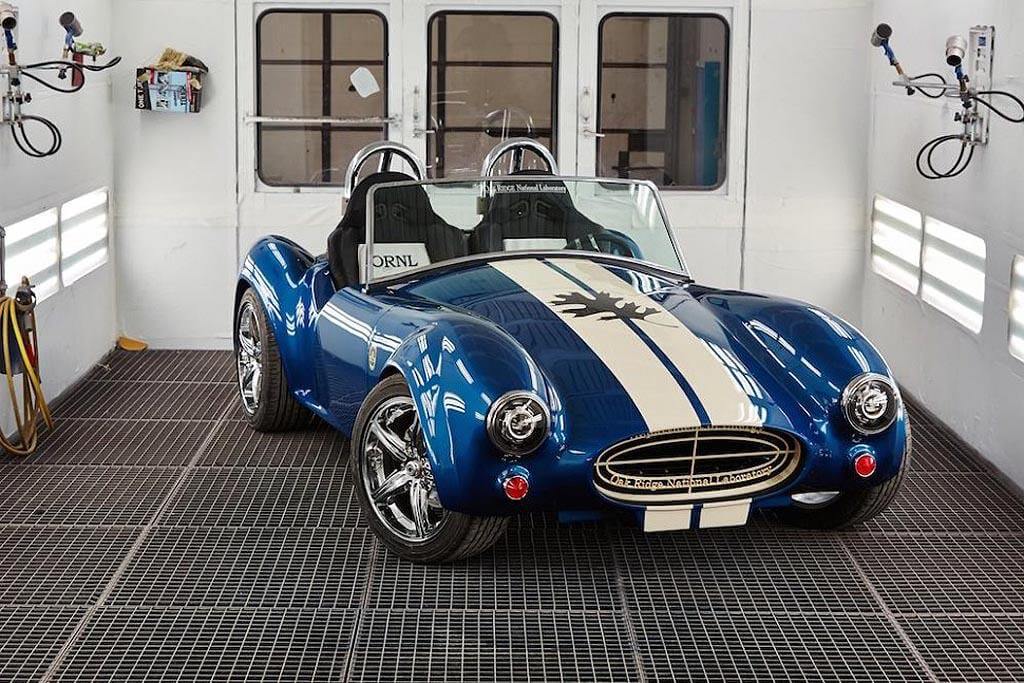
New developments in AM processes, along with related innovations in fields such as advanced materials, will benefit production within the automotive industry as well as alter traditional manufacturing and supply chain pathways. The very famous Shelby Cobra and Local Motors 3d printed car are two examples of the result of the advancement of 3d printing in automotive industry, which has paved a way to experience a notable transition that in the automotive industry.

How is 3d printing in automotive industry paving the way for new car designs?

This printing technology allows for rapid prototyping instead of relying on the traditional method of making a mold and manufacturing a part or hand-tooling a part. There are many advantages of using 3d printing instead of traditional manufacturing, not the least of which are lower costs and faster speeds. The method allows for on-demand tooling, and the parts are lighter and the fabrication process is much more environmentally friendly, requiring a fraction of the energy cost that is required in traditional manufacturing.

In the current landscape, cars are built on long assembly lines that consume staggering amounts of energy, which means even cars built to live an eco-friendly existence roll off the assembly line with a huge carbon footprint. Choosing 3D printing over traditional manufacturing in the automotive industry mainly includes two positive impacts: the exclusion of leftover waste and minimum generation of heat energy, which contributes to an eco-friendly method of processing.

Biggest contribution of 3d printing in Automotive Industry

3d printed Shelby Cobra

3d printing in automotive industry

3d printed Shelby Cobra

Next-generation manufacturing takes on a 50-year-old icon as ORNL researchers transform this classic sports car into a 3d-printed laboratory on wheels. 3d printing enables the seamless integration of advanced technologies with design flexibility and modularity. It provides a platform for rapid development and evaluation. The 3d printed car incorporates “plug and plays” components such as new engine, battery, and fuel cell technologies; hybrid system designs; and power electronics and wireless charging systems, allowing researchers to easily and quickly test out innovative ideas in a driving laboratory.

Olli by local motors

3d printing in automotive industry

Olli-3d printed car by local motors

Local Motors has created history by 3d printing its first Olli, self-driving shuttle in the company’s Knoxville micro-factory. Local Motors has long been innovating the future of vehicle 3d printing. And, Olli is believed to be the only 3d printed transit vehicle on Earth.

 

3d Printer Speed: Time Taken To Print A 3d Model

3d printer speed

3d printer speed: How do 3d printers work? How Fast Can 3d Printers Go? What’s the fastest 3d printer speed? What impact does the 3d printer speed have for the duration of the print process?

So for all these questions let us discuss below.

Ever since time immemorial, 3d printers are focused on creating scale models using computer-aided design (CAD). The first patent for a 3d printer was given to Charles Hull for “Apparatus for Production of Three-dimensional Objects by Stereolithography” in 1986 as Hull wanted to start the first 3d printing company, 3d Systems Corporation.

With the background in industrial manufacturing, most 3d printing service technologies were protected by patents held by companies in the industrial market. As patents expired, 3d printers attracted customers to learn more about it.

It was not until the expiration of Stratasys’ patent in 2009 protecting their ownership of the fused deposition modeling (FDM) process that affordable consumer thermoplastic extrusion printers proliferated. The expiration of subsequent patents covering alternative additive manufacturing processes has further fuelled this growth.”

How do 3d printers work?

3d printers build objects using a process known as additive manufacturing. The material is put down in layers; each layer adds to the previous layer and in turn becomes a base for the next layer. Most 3D printers in the consumer market use thermoplastic inks in the printing process. These polymers become soft within a temperature range and then re-solidify when allowed to cool.

3d printer speed

Functional diagram of a 3d printer

Referring to the diagram above, the print bed is where the object is printed. It is usually covered with an adhesive material, and with some inks, it also needs to be heated in order to minimize distortion in the printed object. The extruder temperature may be set manually, depending on the model; the nozzle position is controlled by the microcontroller, which is directed by commands in the print file.

3d printer speed

Generating 3d print files

The *.STL format was created by Chuck Hull’s original printer. It supports a layering process for one extruder. As printers developed, other formats, both open-source and proprietary, were developed. In 2015, the 3D Manufacturing Format (*.3MF) was announced. Developed and supported by the 3MF Consortium, the aim is to standardize 3D print files.

What Resolution Can 3d Printers print?

3d printing at home gives us the ability to manufacture bespoke objects for a very little cost. But the time it takes for a digital 3d model to be processed into a physical object is not as quick as you might think. The size and print quality of the object will have a dramatic impact on the printing speed and can take many hours to produce a finished result. In fact, All 3DP’s tests show that the printer’s speed has much less impact on the duration of the printing process than the size and the quality settings.

3d printer speed settings of desktop printers

Currently, there are generally three sets of printing speed that 3D printers can support. The first set is has been grouped at around 40 to 50mm/s, while the second set prints at about 80-100mm/s. Meanwhile, the fastest set prints at around 150mm/s. Some printers may even print at a speed faster than 150mm/s.s. Typically, faster 3D printing speed means lower quality, though.Above150mm/s, the quality drops noticeably, and you may experience problems as the filament tends to slip at these speeds.

How to set the 3d printer speed?

The 3d printer speed is usually set in the slicing software that you use to prepare your 3d model for printing. In Cura, version 15.04, for example, you simply enter the printing speed in the print speed field on the Basic tab(in former versions, you first have to switch to Advanced mode and open the Speed tab before you have access to the Print Speed setting).

3d printer speed

CURA

3d printer speed: Cura calculates the duration of the printing process based on printing speed and quality settings.
As soon as you change the print speed(or any other print)setting, Cura recalculates the print duration and display sit. The duration Cura calculates is pretty much identical to the actual print duration.

How long does 3d printing take in practice?

To find out how fast 3d printers actually print, we tested how long it takes to print two more or less complex objects on two popular desktop printers: the Ultimaker 2 and the Printrbot Plus. High-Speed Sintering promises the fastest 3d printing speed: On the industrial scale, there are even more exciting developments on the horizon.

The University of Sheffield has announced that they are building a 3d printer(funded to the tune of £1,000,000pounds)that could produce plastic parts as fast as more traditional high-volume manufacturing methods like injection moulding. The process is called high-speed sintering(HSS) and selectively fuses polymer powder layer by layer, similar to other additive manufacturing processes. But instead of using lasers, HSS will print infra-red-absorbing ink on to a powder bed. After a layer has been printed it’s exposed to infra-red light. It heats the powder covered by the ink and causes it to fuse, while the rest of the powder remains cool.

The team, led by Professor Neil Hopkinson, say the new machine will be able to make parts up to 1m3–the size of a washing machine–which is three times more capable than existing machines. The printing speed will depend on the size of the product. But, Hopkinson estimates that small components will be built at a rate of less than one second per part. But how will this benefit you? The good news is that the technology for HSS is being licensed to industrial 3d printer manufacturers on a non-exclusive basis, with new machines being expected on the market from 2017 onwards.That means we can expect a trickle-down benefit to prosumer-grade 3d printers in the not-too-distant future.

Challenges in 3d Printing

There are many challenges which the 3d printing field faces. Except for a few investors, the investment community traditionally has a no risk-taking task.

Some of the other challenges that are as below –

  • The technologies are extremely capital intensive and so are the materials which are higher than the prices prevalent outside India as everything is imported from the developed countries.
  • A lot of design participants/entities (especially small scale & medium scale) still do not believe in prototyping as an investment but see it as a costly expenditure.
  • Only if materials could be engineered and locally produced, the cost could come down drastically directly resulting in a healthy demand and supply.
  • The size of 3d printing equipment restricts a lot of products from being made at one go.
  • Not many understand the various 3d printing technologies available today and most of the service bureaus do not provide design-prototyping-manufacturing assistance which largely reduces the reach of 3d printing.

Read more:

3d Printed Products: Determining Their Quality

Future Of 3d Printing In India