Quick answer
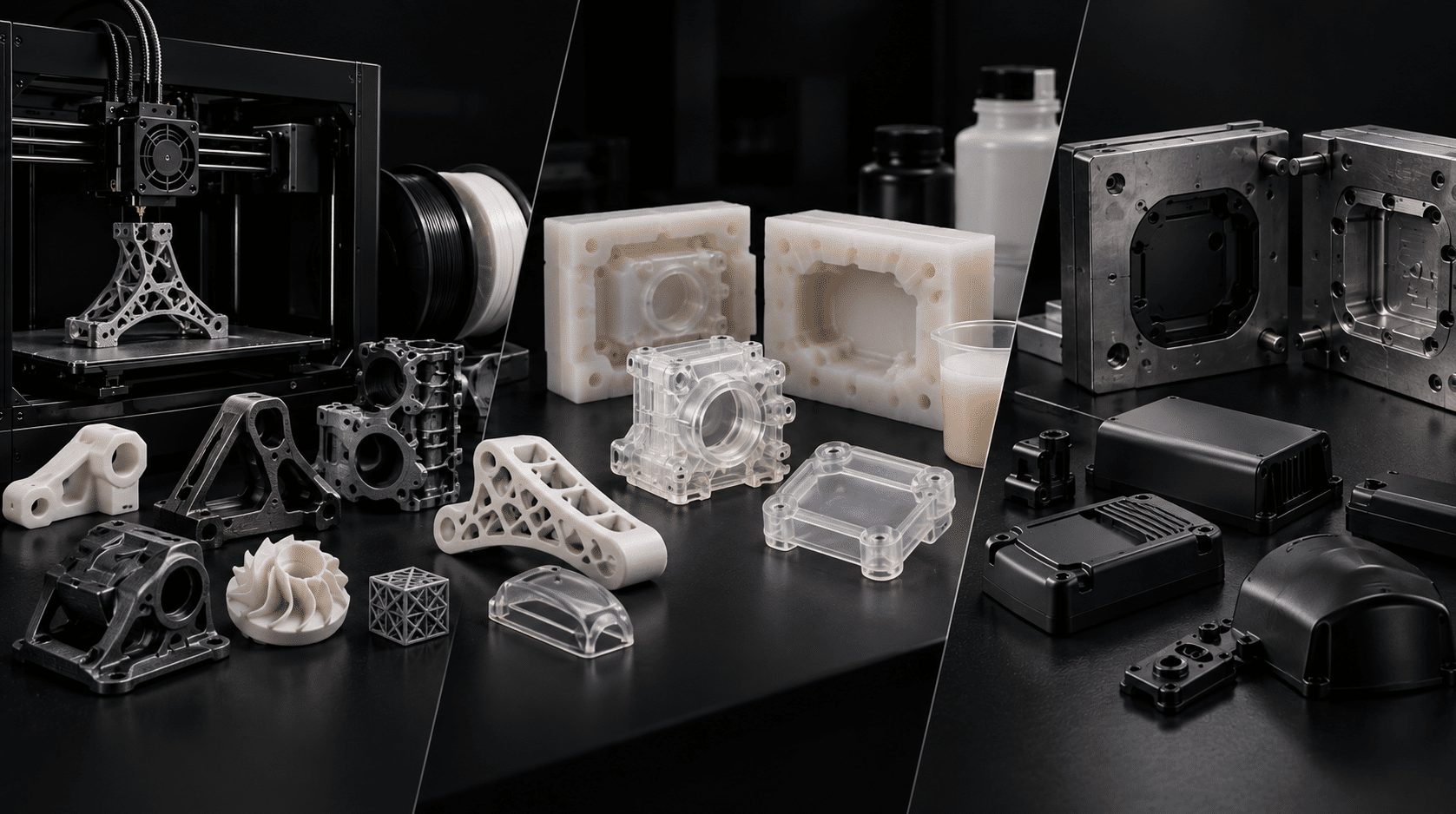
Low-volume manufacturing means producing roughly 50 to 5,000 parts — more than a prototype run, fewer than mass production. In India there are three main routes: production 3D printing (SLS/MJF) for up to a few hundred parts with no tooling, vacuum casting for 10–100 identical parts with a near-moulded finish, and soft-tooling injection molding (aluminium moulds) for about 500–10,000 parts at the lowest cost per part. The right choice depends mainly on quantity, material and how final your design is.
Your prototype works. Customers want it. But you need 200 units, not 20,000 — and nobody wants to spend lakhs on a steel mould for a design that might still change. This is the gap low-volume manufacturing fills.
The good news: you have more options in India than ever. The hard part is choosing between them, because each one wins at a different quantity. This guide compares all three routes side by side, with a worked cost example so you can see where each one becomes the cheapest.
Key takeaways
- Under ~50 parts: 3D printing or vacuum casting is almost always cheaper than any mould.
- ~50–300 parts: SLS 3D printing and vacuum casting compete; choose on material and finish.
- ~300–5,000 parts: soft-tooling injection molding usually gives the lowest cost per part.
- If the design may still change, delay tooling — 3D printing and vacuum casting cost almost nothing to revise.
- Many product launches use a hybrid: ship 3D printed or cast parts now while the mould is being made.
What Is Low-Volume Manufacturing?
Low-volume manufacturing is the production of end-use parts in quantities too large for one-off prototyping but too small to justify full production tooling — typically 50 to 5,000 units. It is also called bridge production, because it bridges the gap between a validated prototype and mass production.
It is used for pilot batches, market tests, first customer shipments, spare parts, custom or seasonal products, and B2B equipment that simply never sells in huge numbers. If you are still at the single-part stage, start with our guide to rapid prototyping services in India.
Option 1: Production 3D Printing (SLS / MJF)
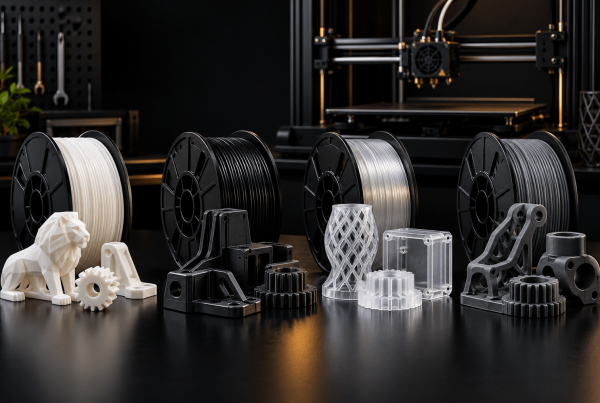
Industrial powder-bed printers such as SLS and MJF build dozens of parts at once in tough nylon (PA12), with no tooling and no support marks. Every part can even be different.
- Best for: 1–300 parts, complex shapes, designs still changing, mixed parts in one order.
- Setup cost: none.
- Lead time: 2–4 days for small batches; 1–3 weeks for a few hundred parts.
- Limitations: cost per part barely falls with volume; material choice is mostly nylons and TPU; surface is slightly grainy (can be dyed, smoothed or painted).
Not sure SLS is the right print process? Compare it in our FDM vs SLA vs SLS guide.
Option 2: Vacuum Casting
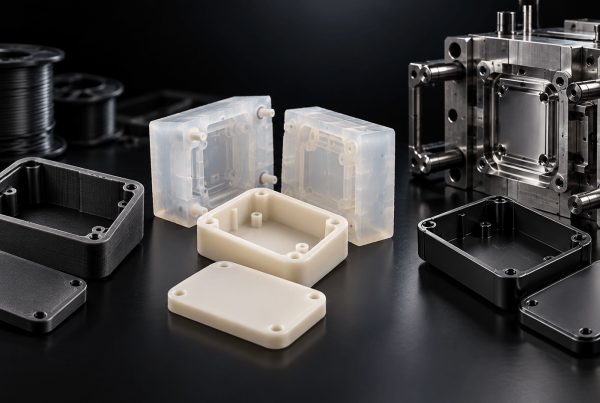
A high-quality master part (usually 3D printed) is used to make a silicone mould. Polyurethane resin is then poured into the mould under vacuum to produce copies with a finish close to injection-moulded parts.
- Best for: 10–100 identical parts that must look and feel like production parts.
- Setup cost: a master and silicone mould — relatively low. Each mould typically gives around 20 good copies before it needs replacing.
- Lead time: 7–15 days.
- Materials: PU resins that simulate ABS, PP, PC, clear parts and rubber in different hardness levels; colours can be matched.
- Limitations: moulds wear out, so cost per part stays flat as quantity grows; resins imitate — but are not — the final production plastic.
See how it works step by step in our guide to the vacuum casting process.
Option 3: Soft-Tooling Injection Molding
Soft tooling uses an aluminium or pre-hardened steel mould instead of a fully hardened production tool. It is faster and cheaper to make, and it moulds parts in the real production plastic — ABS, PP, PC, nylon and more.
- Best for: roughly 500–10,000 parts, stable designs, parts that must use the final material.
- Setup cost: the highest of the three — but typically well below a hardened multi-cavity steel tool.
- Lead time: about 2–4 weeks for the tool, then parts in days.
- Limitations: design changes after tooling are slow and costly; tool life is lower than hardened steel.
For full tooling and per-part pricing, read our injection molding cost in India guide and low-volume vs high-volume injection molding.
3D Printing vs Vacuum Casting vs Soft Tooling: Side-by-Side
| Factor | Production 3D printing (SLS/MJF) | Vacuum casting | Soft-tooling injection molding |
|---|---|---|---|
| Sweet-spot quantity | 1–300 | 10–100 | 500–10,000 |
| Upfront / tooling cost | None | Low (master + silicone moulds) | Highest (aluminium or P20 tool) |
| Cost per part as volume rises | Almost flat | Flat (moulds wear out) | Falls sharply |
| Lead time to first parts | 2–4 days | 7–15 days | 2–4 weeks |
| Materials | PA12, glass-filled PA12, TPU | PU resins simulating ABS, PP, PC, rubber, clear | Real production plastics (ABS, PP, PC, nylon…) |
| Surface finish | Slightly grainy; dye, smooth or paint | Excellent — copies the master | Production-grade, textures possible |
| Design changes | Free — edit the file | New master and mould | Tool modification — slow and costly |
| Best when | Design still evolving or parts are complex | Parts must look production-ready in small numbers | Design is frozen and volumes are rising |
← Swipe to see the full table on mobile
Cost by Quantity: A Worked Example
To show where each route wins, here is an illustrative example: a small electronics enclosure half, about 100 × 60 × 30 mm and 40 g. Figures are indicative 2026 per-part costs in India, including the tooling or mould cost spread across the batch, excluding GST, finishing and shipping.
| Quantity | SLS 3D printing (PA12) | Vacuum casting (PU) | Soft-tool injection molding (ABS) | Usually cheapest |
|---|---|---|---|---|
| 50 parts | ₹800–₹1,200 | ₹1,000–₹1,600 | ₹2,400–₹4,100 | 3D printing or vacuum casting |
| 200 parts | ₹700–₹1,000 | ₹900–₹1,450 | ₹650–₹1,100 | Close — choose on material & finish |
| 1,000 parts | ₹600–₹900 | Not practical | ₹160–₹280 | Soft tooling |
| 5,000 parts | ₹550–₹850 | Not practical | ₹65–₹120 | Soft tooling (or steel tool beyond this) |
← Swipe to see the full table on mobile
How to read this: soft tooling starts expensive because the mould cost is shared across only a few parts, then drops fast. 3D printing and vacuum casting stay roughly flat. For this part, the lines cross at around 200–300 units. A larger or more complex part pushes the crossover higher; a small, simple part pushes it lower.
Want a deeper side-by-side of the two ends of the scale? Read 3D printing vs injection molding. For 3D printing rates by material, see our cost of 3D printing in India guide.
Which Route Fits Your Product?
| Product / industry | Typical first batch | Recommended route |
|---|---|---|
| IoT and electronics enclosures | 50–500 units | SLS for the pilot, then soft tooling once the PCB and design are frozen |
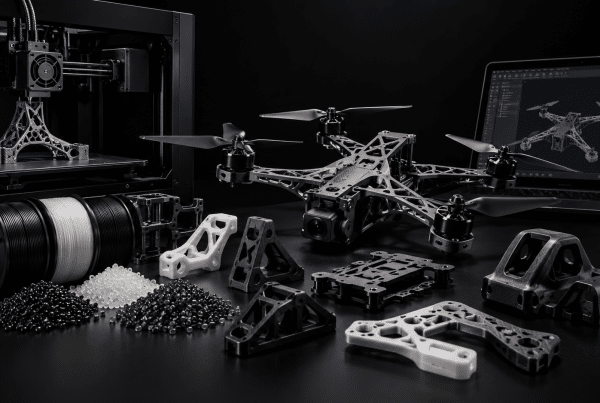
| Drone arms, mounts and canopies | 20–300 sets | SLS / MJF nylon — see 3D printed drone parts |
| Automotive trims, brackets and covers | 100–2,000 | Vacuum casting for fit and look checks, soft tooling for production |
| Medical device housings | 50–1,000 | Vacuum casting for trials, then injection molding in the final material |
| Equipment manufacturer spare parts | 10–200 per year | On-demand SLS printing — no stock, no tooling |
| Consumer product launch | 500–5,000 | Soft tooling, with 3D printed units to cover early orders |
← Swipe to see the full table on mobile
The Hybrid Strategy: Don't Wait for the Mould
You don’t have to pick just one route. Many product teams in India run them in sequence:
- Weeks 0–2: ship the first 20–100 units as SLS prints or vacuum castings so sales and feedback start immediately.
- Weeks 1–4: build the soft tool in parallel, using feedback from those first units to lock the design.
- Week 4 onwards: switch to moulded parts for lower cost per unit as orders grow.
This avoids the two most expensive mistakes in low-volume manufacturing: tooling a design too early, and losing months of sales waiting for a mould.
5 Questions to Decide Your Route
- How many parts do you need in the next 12 months? Under 300, start with 3D printing or vacuum casting. Over 500, get a soft-tooling quote.
- Must the part be in the exact production plastic? If yes — for certification, chemical resistance or snap-fits — soft tooling is the safest route.
- How important is surface finish? For customer-facing parts in small numbers, vacuum casting gives the closest-to-moulded look.
- Is the design final? If it may still change, avoid tooling for now.
- When do you need the first parts? In days: 3D printing. In 1–2 weeks: vacuum casting. In 3–4 weeks: soft tooling.
Before you commit to a mould, a design-for-manufacturing (DFM) review can cut both tooling and part cost. Our 3D CAD design team can prepare or optimise your model, and our checklist on choosing an injection molding partner in India covers what to ask any supplier.
Frequently Asked Questions
What is considered low-volume manufacturing?
Low-volume manufacturing usually means producing about 50 to 5,000 end-use parts. It sits between prototyping (1–50 parts) and mass production (10,000+ parts) and is often called bridge production because it bridges a validated prototype and full-scale tooling.
Is vacuum casting cheaper than 3D printing?
For a single part, 3D printing is usually cheaper. For 10–100 identical parts that need a smooth, production-like finish, vacuum casting is often better value. Each silicone mould gives around 20 copies, so costs stay fairly flat and it is rarely economical beyond a few hundred parts.
What is soft tooling in injection molding?
Soft tooling is an injection mould made from aluminium or pre-hardened steel instead of fully hardened tool steel. It is faster and cheaper to make, moulds parts in the real production plastic, and suits roughly 500 to 10,000 parts, though it wears out sooner than a hardened steel tool.
At what quantity does injection molding become cheaper than 3D printing?
For a small plastic part, injection molding with a soft tool typically becomes cheaper than SLS 3D printing somewhere around 200–300 units. Larger or more complex parts push that point higher. The exact crossover depends on part size, material and tooling cost.
Can 3D printed parts be used as final products?
Yes. Parts printed in PA12 nylon by SLS or MJF are tough, stable and widely used as end-use components in drones, electronics enclosures, fixtures and spare parts. They are best where quantities are modest or designs change often.
How long does low-volume manufacturing take in India?
Production 3D printing delivers small batches in 2–4 days and a few hundred parts in 1–3 weeks. Vacuum casting takes 7–15 days. Soft-tooling injection molding takes about 2–4 weeks to build the tool, after which parts are produced in days.
Can I switch from 3D printing to injection molding later?
Yes, and it is the most common path. Designs proven with 3D printed or vacuum cast parts can move to injection molding once volumes grow. A DFM review before tooling adds draft angles and uniform walls so the part moulds cleanly.
Not sure which route is cheapest for your part?
Send us your CAD file and quantity. We’ll compare 3D printing, vacuum casting and soft tooling for your part and recommend the most cost-effective option.
Get a 3-Route Quote Call +91 86100 39566