Choosing between low-volume and high-volume injection molding affects your cost, timeline, and how fast you enter the market. If you choose the wrong method, you risk spending more on tooling or delaying your launch. This guide breaks down both options in simple terms so you can choose the right path for your project.
Many teams in India use Precious3D to move from prototype to production without wasting money or time. Here’s how each method works.
What Injection Molding Really Does
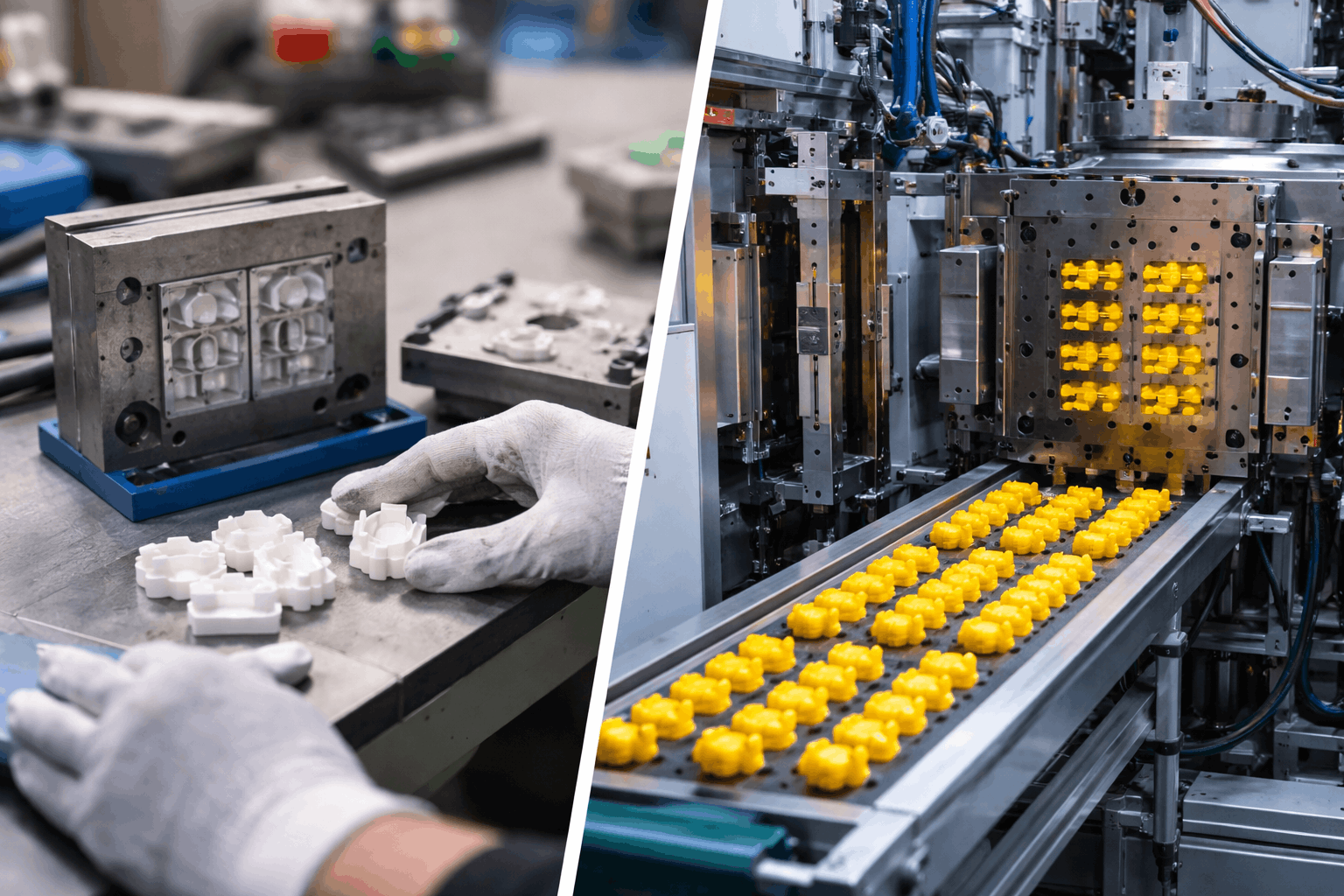
Injection molding forces molten plastic into a mold and creates identical parts quickly. It delivers repeatable quality and durability at scale. But not every project needs millions of parts, and that’s why your volume decision matters.
What Is Low-Volume Injection Molding?
Low-volume molding usually covers 100 to 10,000 parts. It’s the right choice when you’re still shaping or validating your product.
Best for:
- Market testing
- MVPs and early prototypes
- Fit and function checks
- Limited batches before launch
Low-volume molds use aluminum or 3D-printed tooling. They do not last forever, but they cut tooling cost and speed up turnaround.
Choose low-volume when:
- You want fast production
- You expect design updates
- You want low upfront cost
- Your product is not validated yet
Many teams pair 3D printing with low-volume molding so they can test parts before ordering larger molds.
What Is High-Volume Injection Molding?
High-volume molding starts at 50,000 parts and goes into the millions. This method supports products with steady demand.
Best for:
- Mass-market consumer items
- Automotive components
- Medical parts with long lifecycles
- Products sold nationally or globally
High-volume molds use hardened steel, built to last millions of cycles. The tooling cost is higher, but the cost per part drops significantly.
Choose high-volume when:
- Your design is final
- Your sales are stable
- You want the lowest cost per part
- You can invest in tooling upfront
A 2024 report from Plastics Market Insights showed that brands reduce part costs by 40–70% when they move from low-volume tooling to steel molds.
Low-Volume vs High-Volume: Cost Breakdown
| Factor | Low-Volume Injection Molding | High-Volume Injection Molding |
|---|---|---|
| Tooling Cost | ₹20,000 – ₹1,50,000 | ₹2,00,000 – ₹10,00,000+ |
| Cost per Unit | ₹20 – ₹100+ | ₹2 – ₹10 |
| Tooling Lead Time | 1–3 weeks | 4–8 weeks |
| Design Flexibility | High | Low |
| Best For | Testing, short runs | Mass production |
According to a 2025 analysis by Plastics Technology, breakeven usually happens around 20,000–30,000 units for common consumer products.
Speed and Flexibility: Low-Volume Wins
If you want to launch fast, low-volume molding gives you the edge. You get tooling ready in weeks, and you can change the design without paying a huge penalty.
This helps when you’re running:
- Crowdfunding campaigns
- Design variation tests
- Seasonal or limited-run products
Cost Efficiency: High-Volume Wins at Scale
High-volume molding reduces cost per part once you scale production. Steel molds offer better consistency, polish, and tool life.
Manufacturing advisor Ryan Keller puts it simply: “Low-volume saves you at the start. High-volume saves you over time.”
Quality and Finish: Both Can Deliver
Modern low-volume molds can still achieve ±0.1 mm tolerances and smooth finishes. High-volume steel molds add even higher precision and durability.
Precious3D works with verified mold makers across India to maintain consistent results for both production types.