

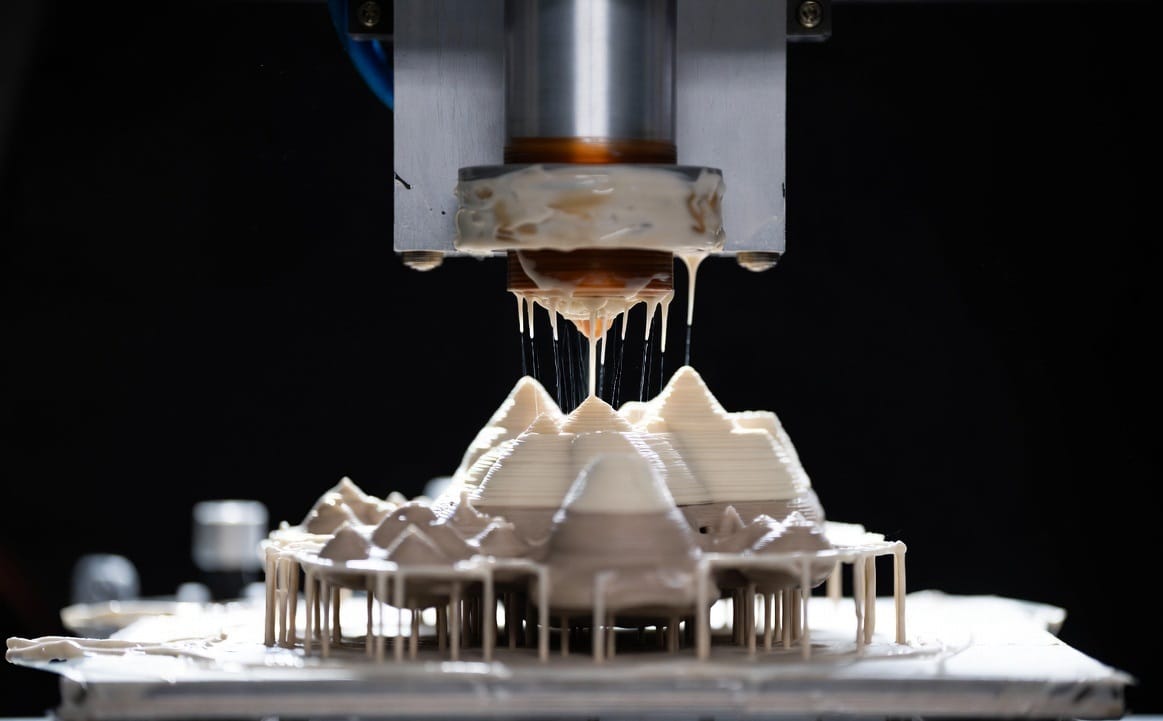
3D printing is a new efficient additive manufacturing technology. During the 3D printing process, metal powder or adhesive materials with a plastic shrinkage characteristic are used in a 3D printer to print layer by layer, which is the principal method of additive manufacturing. This new additive manufacturing technology is extensively used in the areas of product design and prototyping, medical product manufacturing, vehicle design, engineering, spaceflight, etc. Ceramic 3D printing is used to create the ceramic prototypes. There are 2 types of ceramic 3D printing:
- Indirect 3d printing
- Direct 3d printing
Ceramic 3D Printing: Comparison Table
| Technology | Cost | Accuracy | Best Use Case |
|---|---|---|---|
| Binder Jetting | Low to Medium | Medium | Bulk production, complex shapes, industrial parts |
| SLA / DLP (Photopolymerization) | Medium to High | Very High | Precision parts, dental, medical, fine details |
| Material Extrusion (DIW / Robocasting) | Low | Low to Medium | Prototypes, research, custom designs |
| Selective Laser Sintering (SLS) | High | High | Strong, functional, heat-resistant components |
| Laminated Object Manufacturing (LOM) | Medium | Low | Large parts, simple geometries |
Compared with forming in traditional ways, forming with 3D printing is more rapid and efficient, with a lower manufacturing cost for ceramic products. A 3D-printed product from a computer-aided design has a higher precision than a handmade ceramic article. The 3D printer is the essential equipment for 3D printing. Embedded chips precisely control the position of the extruder in this printer. These chips can control the quantities of material extruded and the extrusion time. In addition to high-density ceramic slip, the plastic filament can also be printed directly, and it is the best material to use for indirect 3D printing of a product.
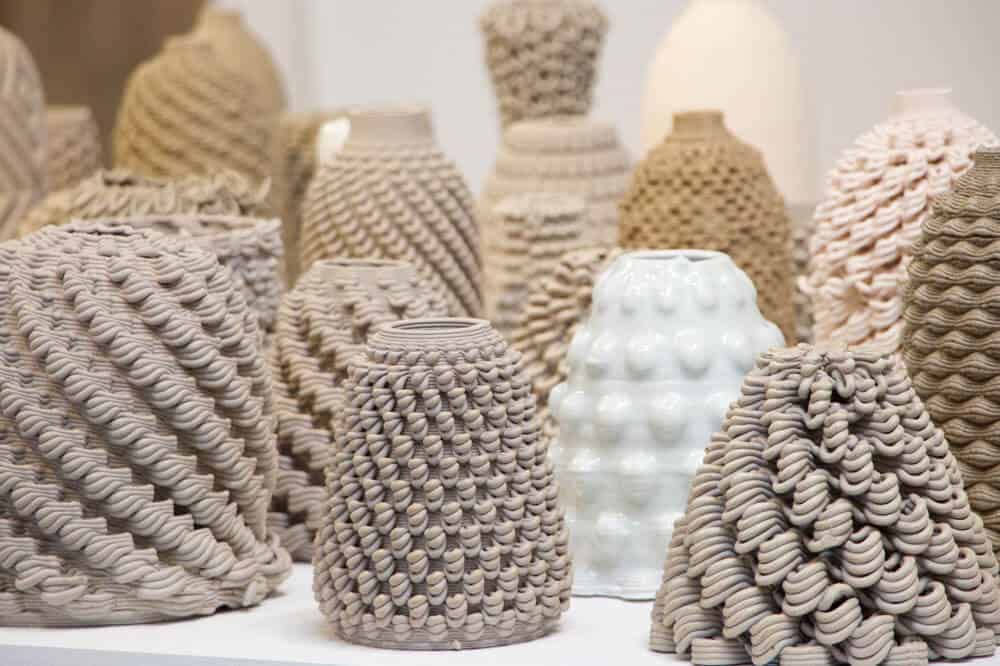
Working of Ceramic 3D Printing
Ceramic 3D printing is a process where a digital design is turned into a real ceramic part, built layer by layer. Unlike traditional methods that rely heavily on molds, this approach gives more flexibility in design and faster production.
Step-by-Step Process
- Design creation
Everything starts with a 3D model, usually made in CAD software. This file is then exported in a printable format like STL. - Material preparation
Depending on the technology used, the ceramic material is prepared as a paste, slurry, or fine powder. - Printing process
The printer builds the object layer by layer. It may deposit material or use light/heat to solidify each layer. Common methods include binder jetting, SLA, and extrusion. - Drying stage
The printed part, often called a “green part,” is left to dry carefully. This step removes moisture and helps avoid cracks. - Debinding
Any binders or additives used during printing are removed, usually by controlled heating. - Sintering (final firing)
The part is heated at high temperatures in a kiln. This step strengthens the ceramic and gives it its final properties.
Benefits of Ceramic 3D Printing
Ceramic 3D printing offers several advantages over traditional manufacturing methods, especially for complex and high-performance applications:
- Design freedom: Create complex and intricate shapes that are difficult with conventional techniques.
- No tooling required: Eliminates the need for molds, reducing upfront costs and production time.
- High heat resistance: Suitable for applications exposed to extreme temperatures.
- Smooth surface finish: Produces detailed parts with minimal post-processing.
- Reduced material waste: Uses only the necessary material, making it more efficient.
- Easy customization: Each part can be customized without increasing production costs.
- Faster prototyping: Speeds up product development and testing cycles.
- Strong and lightweight parts: Optimized designs improve strength while reducing weight.
- Excellent chemical resistance: Ideal for harsh and corrosive environments.
- Eco-friendly process: Generates less waste compared to traditional ceramic manufacturing.
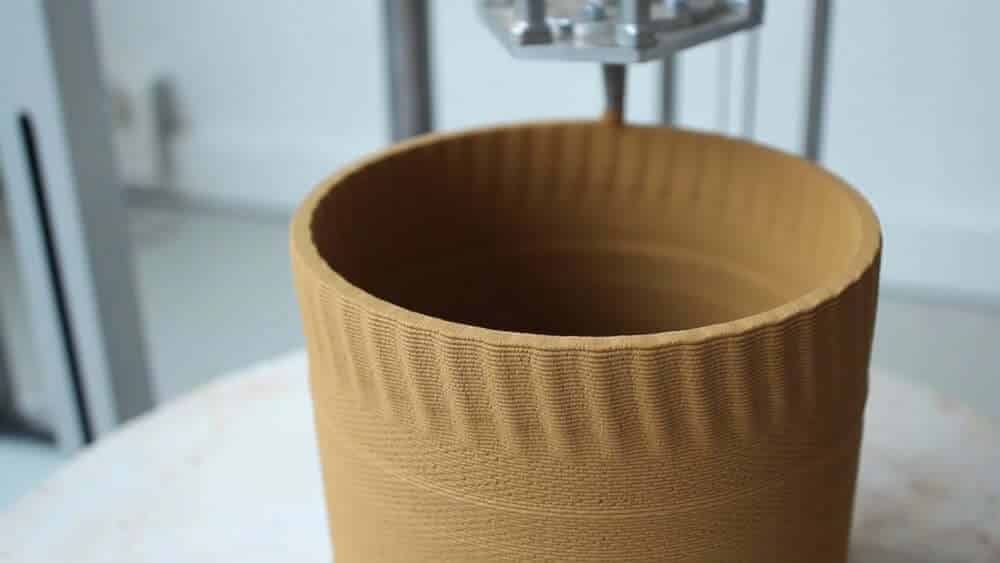
3d printed ceramic pot
Currently, ceramic is the only known 3d printing material that is food safe. In the process of creating and glazing the material, a type of gloss that is non-toxic and lead-free is used. This means that one can use it to print utensils like cups, plates, bowls, and other kitchen tools.
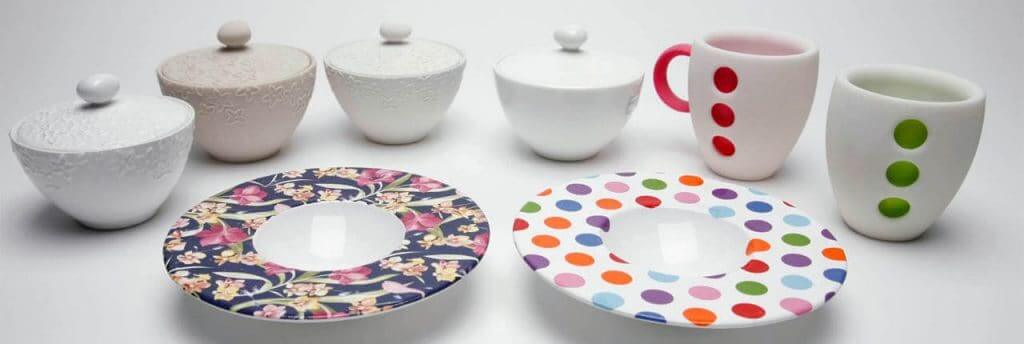
3D printed ceramic cups and plates
Basically, one can safely print tableware and home décor in which you’re going to serve food or beverages. Otherwise, it’s also commonly used for creating vases, candle holders, art, and many more.
What is ceramic 3D printing?
Ceramic 3D printing is an additive manufacturing process where ceramic materials are used to create parts layer by layer, allowing complex and precise designs.
How does ceramic 3D printing work?
The process includes design creation, material preparation, printing, drying, debinding, and sintering to achieve final strength.
What materials are used?
Common materials include alumina, zirconia, silica, and other advanced ceramics depending on the application.
Where is it used?
Used in aerospace, medical, automotive, electronics, and prototyping industries.
Is ceramic 3D printing expensive?
Costs vary based on size, material, and complexity, but it is cost-effective for prototypes and low-volume production.