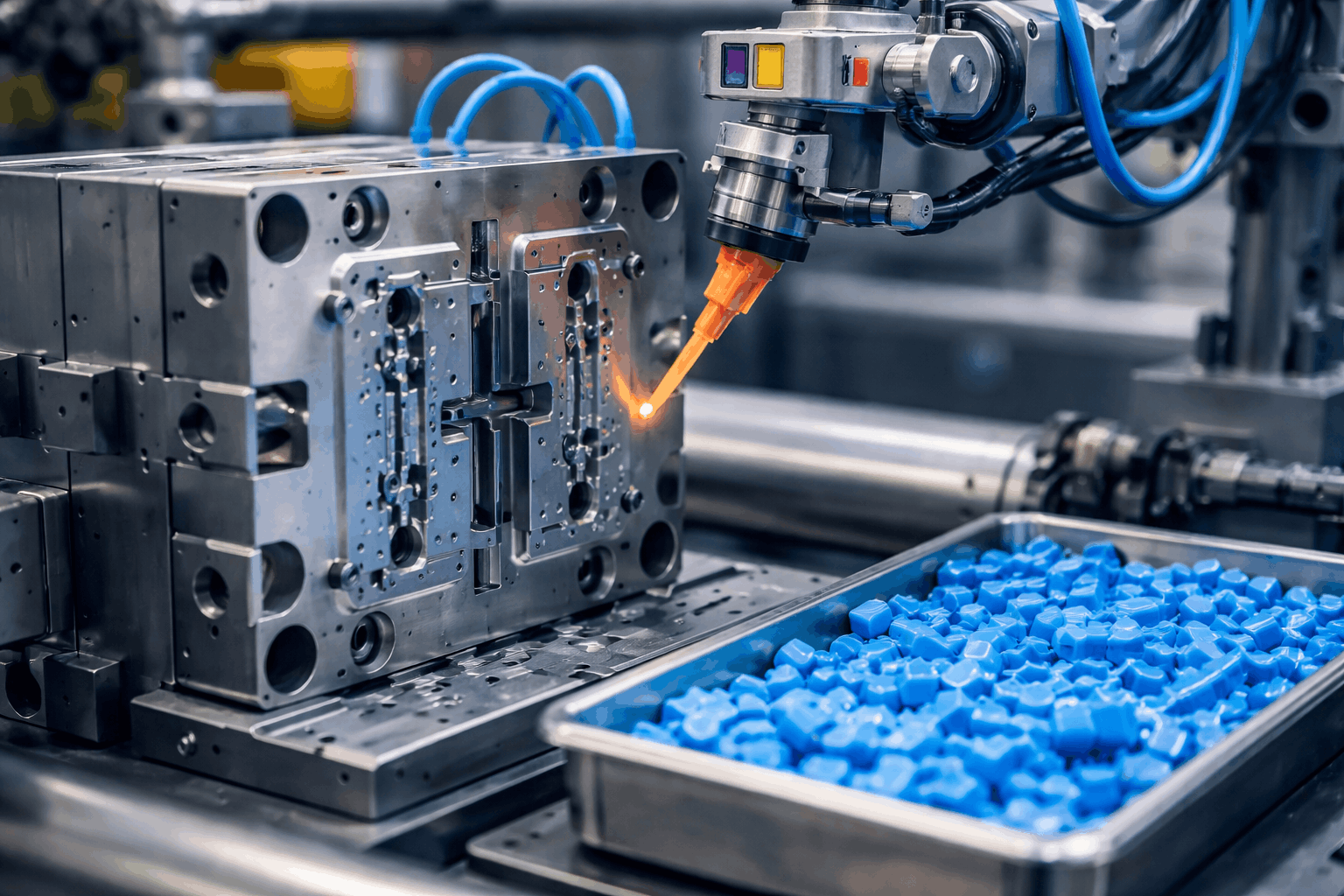
Injection molding is one of the most cost-efficient manufacturing processes in India—but only if you understand the complete cost structure. Many businesses underestimate tooling, ignore hidden costs, or miscalculate per-unit pricing.
This guide breaks down real 2026 costs in India, with comparisons, stats, and practical insights to help you estimate, reduce, and optimize your injection molding budget.
📊 Injection Molding Cost Overview (India vs Global)
| Cost Type | India (2026) | Global Average | Key Insight |
|---|---|---|---|
| Tooling Cost | ₹80,000 – ₹25,00,000+ | $1,000 – $100,000+ | India is 30–60% cheaper |
| Per Unit Cost | ₹5 – ₹400+ | $0.20 – $10 | Volume reduces cost drastically |
| Machine Cost | ₹20L – ₹1Cr+ | Similar globally | Capex impacts vendor pricing |
| Lead Time | 2–8 weeks | 3–12 weeks | Faster turnaround in India |
👉 Injection molding services in India is significantly cheaper due to lower labor + operational costs, making it ideal for global outsourcing.
🏭 1. Tooling Cost in India (Biggest Investment)
Tooling (mold) is a one-time cost, but also the largest upfront expense.
💰 Typical Tooling Cost (India)
| Mold Type | Cost Range |
|---|---|
| Simple Mold (small part) | ₹80,000 – ₹1,20,000 |
| Medium Complexity | ₹1.5L – ₹5L |
| High Precision / Multi-cavity | ₹5L – ₹25L+ |
👉 Example: A basic 250×250 mm mold costs around ₹80K–₹1.2L in India
⚙️ What Drives Tooling Cost?
- Material (P20 vs H13 steel)
- Number of cavities
- Design complexity
- Surface finish requirements
- Tool life (low vs high volume production)
📌 Fact: Complex molds globally can exceed $100,000, but India offers much lower alternatives.
🔁 2. Per Unit Cost (Production Cost)
Once tooling is ready, per-unit cost becomes the focus.
💸 Per Part Cost in India
| Production Volume | Cost per Unit |
|---|---|
| 1,000 units | ₹50 – ₹400 |
| 10,000 units | ₹10 – ₹80 |
| 100,000+ units | ₹5 – ₹30 |
👉 Global benchmarks show $0.20–$10 per part depending on volume
📉 Key Insight
- Higher volume = lower cost per unit
- Tooling cost gets distributed across production
📌 Example:
A ₹2L mold + ₹20/unit production becomes ₹40/unit at low volume, but drops below ₹10 at scale.
⚖️ Tooling vs Per Unit Cost (Critical Comparison)
| Factor | Tooling Cost | Per Unit Cost |
|---|---|---|
| Type | One-time | Recurring |
| Impact | High upfront | Long-term |
| Best for | Mass production | All volumes |
| Optimization | Design & material | Volume & cycle time |
👉 Smart strategy:
- Low volume → reduce tooling cost
- High volume → optimize per-unit cost
⚠️ 3. Hidden Costs Most Buyers Ignore
This is where most budgets go wrong.
🚨 Hidden Cost Breakdown
| Cost Type | Estimated Impact |
|---|---|
| Design & CAD | 10–15% |
| Material wastage | 5–10% |
| Setup & labor | 5–8% |
| Finishing / polishing | 5–20% |
| Packaging | ₹2–₹20 per unit |
| Maintenance of mold | Long-term cost |
👉 Design + manufacturing alone can account for 30–50% of mold cost
🧠 4. Cost Calculation Formula (Simple)
Total Cost = Tooling Cost + (Per Unit Cost × Quantity)
Example:
- Tooling = ₹2,00,000
- Per unit = ₹20
- Quantity = 50,000
👉 Total = ₹2,00,000 + ₹10,00,000 = ₹12,00,000
👉 Effective cost per unit = ₹24
📈 5. Real Industry Insights (India 2026)
- India’s plastic molding demand is growing due to automotive, packaging, and electronics sectors
- Multi-cavity molds reduce cost per part significantly
- India offers 30–60% lower manufacturing cost vs US/EU
- Faster lead times = better for startups & MVP production
🔍 People Also Search For (SEO Boost Section)
- Injection molding cost per kg in India
- Plastic mold cost calculator India
- Injection molding vs 3D printing cost
- Minimum order quantity for injection molding
- Prototype vs production mold cost
🆚 Injection Molding vs 3D Printing (Cost Comparison)
| Factor | Injection Molding | 3D Printing |
|---|---|---|
| Setup Cost | High | Low |
| Per Unit Cost | Very low (bulk) | High |
| Best For | Mass production | Prototyping |
| Speed | Fast after setup | Immediate |
| Scalability | Excellent | Limited |
👉 Insight:
- Use 3D printing for testing
- Switch to injection molding for scale
🎯 How to Reduce Injection Molding Cost
- Simplify part design
- Use standard materials (PP, ABS)
- Increase production volume
- Choose multi-cavity molds
- Optimize cycle time
🚀 Final Thoughts (Lead Angle)
Injection molding in India is highly cost-effective, but only when you balance:
👉 Tooling investment
👉 Per-unit pricing
👉 Hidden costs
If you’re planning production, the smartest move is to:
✔ Get a DFM (Design for Manufacturing) analysis
✔ Compare multiple vendors
✔ Start with prototype tooling