Category

Injection Molding

Injection Molding Cost in India (2026): Tooling, Per Unit & Hidden Costs

Injection molding is one of the most cost-efficient manufacturing processes in India—but only if you understand the complete cost structure. Many businesses underestimate tooling, ignore hidden costs, or miscalculate per-unit pricing.

This guide breaks down real 2026 costs in India, with comparisons, stats, and practical insights to help you estimate, reduce, and optimize your injection molding budget.


📊 Injection Molding Cost Overview (India vs Global)

Cost TypeIndia (2026)Global AverageKey Insight
Tooling Cost₹80,000 – ₹25,00,000+$1,000 – $100,000+India is 30–60% cheaper
Per Unit Cost₹5 – ₹400+$0.20 – $10Volume reduces cost drastically
Machine Cost₹20L – ₹1Cr+Similar globallyCapex impacts vendor pricing
Lead Time2–8 weeks3–12 weeksFaster turnaround in India

👉 Injection molding services in India is significantly cheaper due to lower labor + operational costs, making it ideal for global outsourcing.


🏭 1. Tooling Cost in India (Biggest Investment)

Tooling (mold) is a one-time cost, but also the largest upfront expense.

💰 Typical Tooling Cost (India)

Mold TypeCost Range
Simple Mold (small part)₹80,000 – ₹1,20,000
Medium Complexity₹1.5L – ₹5L
High Precision / Multi-cavity₹5L – ₹25L+

👉 Example: A basic 250×250 mm mold costs around ₹80K–₹1.2L in India

⚙️ What Drives Tooling Cost?

  • Material (P20 vs H13 steel)
  • Number of cavities
  • Design complexity
  • Surface finish requirements
  • Tool life (low vs high volume production)

📌 Fact: Complex molds globally can exceed $100,000, but India offers much lower alternatives.


🔁 2. Per Unit Cost (Production Cost)

Once tooling is ready, per-unit cost becomes the focus.

💸 Per Part Cost in India

Production VolumeCost per Unit
1,000 units₹50 – ₹400
10,000 units₹10 – ₹80
100,000+ units₹5 – ₹30

👉 Global benchmarks show $0.20–$10 per part depending on volume

📉 Key Insight

  • Higher volume = lower cost per unit
  • Tooling cost gets distributed across production

📌 Example:
A ₹2L mold + ₹20/unit production becomes ₹40/unit at low volume, but drops below ₹10 at scale.


⚖️ Tooling vs Per Unit Cost (Critical Comparison)

FactorTooling CostPer Unit Cost
TypeOne-timeRecurring
ImpactHigh upfrontLong-term
Best forMass productionAll volumes
OptimizationDesign & materialVolume & cycle time

👉 Smart strategy:

  • Low volume → reduce tooling cost
  • High volume → optimize per-unit cost

⚠️ 3. Hidden Costs Most Buyers Ignore

This is where most budgets go wrong.

🚨 Hidden Cost Breakdown

Cost TypeEstimated Impact
Design & CAD10–15%
Material wastage5–10%
Setup & labor5–8%
Finishing / polishing5–20%
Packaging₹2–₹20 per unit
Maintenance of moldLong-term cost

👉 Design + manufacturing alone can account for 30–50% of mold cost


🧠 4. Cost Calculation Formula (Simple)

Total Cost = Tooling Cost + (Per Unit Cost × Quantity)

Example:

  • Tooling = ₹2,00,000
  • Per unit = ₹20
  • Quantity = 50,000

👉 Total = ₹2,00,000 + ₹10,00,000 = ₹12,00,000

👉 Effective cost per unit = ₹24


📈 5. Real Industry Insights (India 2026)

  • India’s plastic molding demand is growing due to automotive, packaging, and electronics sectors
  • Multi-cavity molds reduce cost per part significantly
  • India offers 30–60% lower manufacturing cost vs US/EU
  • Faster lead times = better for startups & MVP production

🔍 People Also Search For (SEO Boost Section)

  • Injection molding cost per kg in India
  • Plastic mold cost calculator India
  • Injection molding vs 3D printing cost
  • Minimum order quantity for injection molding
  • Prototype vs production mold cost

🆚 Injection Molding vs 3D Printing (Cost Comparison)

FactorInjection Molding3D Printing
Setup CostHighLow
Per Unit CostVery low (bulk)High
Best ForMass productionPrototyping
SpeedFast after setupImmediate
ScalabilityExcellentLimited

👉 Insight:

  • Use 3D printing for testing
  • Switch to injection molding for scale

🎯 How to Reduce Injection Molding Cost

  • Simplify part design
  • Use standard materials (PP, ABS)
  • Increase production volume
  • Choose multi-cavity molds
  • Optimize cycle time

🚀 Final Thoughts (Lead Angle)

Injection molding in India is highly cost-effective, but only when you balance:

👉 Tooling investment
👉 Per-unit pricing
👉 Hidden costs

If you’re planning production, the smartest move is to:

✔ Get a DFM (Design for Manufacturing) analysis
✔ Compare multiple vendors
✔ Start with prototype tooling
How Much Does Low-Volume Injection Moulding Cost in the UK?

You want to know how much low-volume injection moulding costs in the UK. The answers online jump around. Some mention “cheap tooling,” others talk about “rapid moulds,” and none of it gives you a real number. So let’s make this simple and direct. This guide explains what you actually pay, why the cost changes, and what you should expect in 2026.

What “Low-Volume” Really Means in the UK

Low-volume injection moulding usually means runs between 100 and 10,000 parts. It’s the middle ground between rapid prototyping and mass production. You choose this when you want real production-grade plastic parts without spending £20,000+ on full steel tooling.

Most UK manufacturers now use aluminium tooling for low-volume batches because it cuts machining time. That drops cost and speeds up production.

Average Low-Volume Injection Moulding Cost in the UK

You pay two things: tooling cost and per-part cost. Here’s the breakdown:

Cost TypeTypical Price (UK)Notes
Tooling Cost£1,200 – £6,500Aluminium tools; simple parts start lower
Per-Part Cost£0.80 – £6Material, cycle time, part size matter
Total Cost for 1,000 Parts£2,500 – £9,000Based on simple ABS or PP components

Most small UK companies spend between £3,000 and £12,000 for a complete low-volume project.

What Drives the Cost

Several factors change your budget. You control many of them.

1. Tooling Material

Aluminium tools cost less and suit batches under 10,000 units. Steel tools last longer but cost more. If you only need proof-of-concept products or early production, aluminium saves money.

2. Part Geometry

Sharp corners, deep ribs, thin walls, threads, and undercuts increase machining time. When possible, simplify the geometry. You save on tooling and shorten lead times.

3. Material Choice

Common materials like ABS and PP cost less. Engineering plastics such as Nylon, PC, and PEEK raise the per-part cost because they need higher mould temperatures and longer cycle times.

4. Batch Size

Larger batches lower per-part cost. You pay the tooling fee once, so more parts stretch its value.

5. Finishing

Texturing, painting, coating, inserts, and ultrasonic welding increase cost. Keep finishes minimal if you want a lower price.

2026 Market Trends Affecting UK Moulding Prices

Several UK manufacturing reports point to rising energy costs, higher hourly labour rates, and improved automation. These shift pricing in predictable ways:

  • Energy cost increased production rates by about 3–7% across UK plastics facilities in 2024.
  • Automation adoption grew 20% in 2025, which lowered cycle-time costs for simple parts.
  • Tooling imports from Europe dropped because UK shops now supply aluminium tools with shorter lead times.

These trends push low-volume moulding prices slightly higher than pre-2023 levels, but turnaround is faster and tooling is more reliable.

Expert Opinions

“Low-volume moulding makes sense when you want real parts fast without locking money into full steel tooling.” — UK Product Engineer, 2024

“The biggest savings come from simplifying the geometry. One design change can cut tooling costs in half.” — Injection Mould Toolmaker, 2025

Is Low-Volume Injection Moulding Cheaper Than 3D Printing?

Up to 40 parts, 3D printing can be a winner. But post that, the low-volume injection molds we make make the per-unit cost the same as the 3D print cost. Injection molded parts have superior strength and finish, so it’s a clear winner. But after that, injection moulding drops the per-unit cost fast. At around 300–500 parts, moulding becomes significantly cheaper.

Injection Moulding FAQs

Q: Is low-volume moulding worth it for startups?

Yes. You get production-quality parts without large investment. You also test the market faster.

Q: How long does tooling take?

Most UK toolmakers take 2-4 weeks for aluminium moulds.

Q: Why does one supplier quote £1,500 and another £6,000?

Tool design, machining hours, and finishing vary. Always compare tool lifetime and maintenance.

Q: Can I get colour-matched parts?

Yes. Colour matching adds a small fee, usually £30–£70 per batch.

Q: What is the cheapest way to lower cost?

Simplify the part. Remove undercuts. Avoid unnecessary textures.

When Low-Volume Moulding Makes Sense

You should pick low-volume moulding when you want:

  • real production-quality parts
  • a reasonable up-front cost
  • faster turnaround than traditional tooling
  • units ready for market testing

It’s the right option when you know the design is stable and you plan to scale later. You can upgrade to steel tooling after you confirm demand.

Conclusion

Low-volume injection moulding in the UK usually costs between £3,000 and £12,000 for complete production. You pay for tooling, per-part cost, and finishing. Keep the part simple, choose common materials, and pick aluminium tooling to control your budget.

If you plan this early, you avoid overruns and get your parts ready sooner.

For deeper reading:

Low-Volume vs High-Volume Injection Molding: What’s Right for Your Project?

Choosing between low-volume and high-volume injection molding affects your cost, timeline, and how fast you enter the market. If you choose the wrong method, you risk spending more on tooling or delaying your launch. This guide breaks down both options in simple terms so you can choose the right path for your project.

Many teams in India use Precious3D to move from prototype to production without wasting money or time. Here’s how each method works.

Low-Volume vs High-Volume Injection Molding

What Injection Molding Really Does

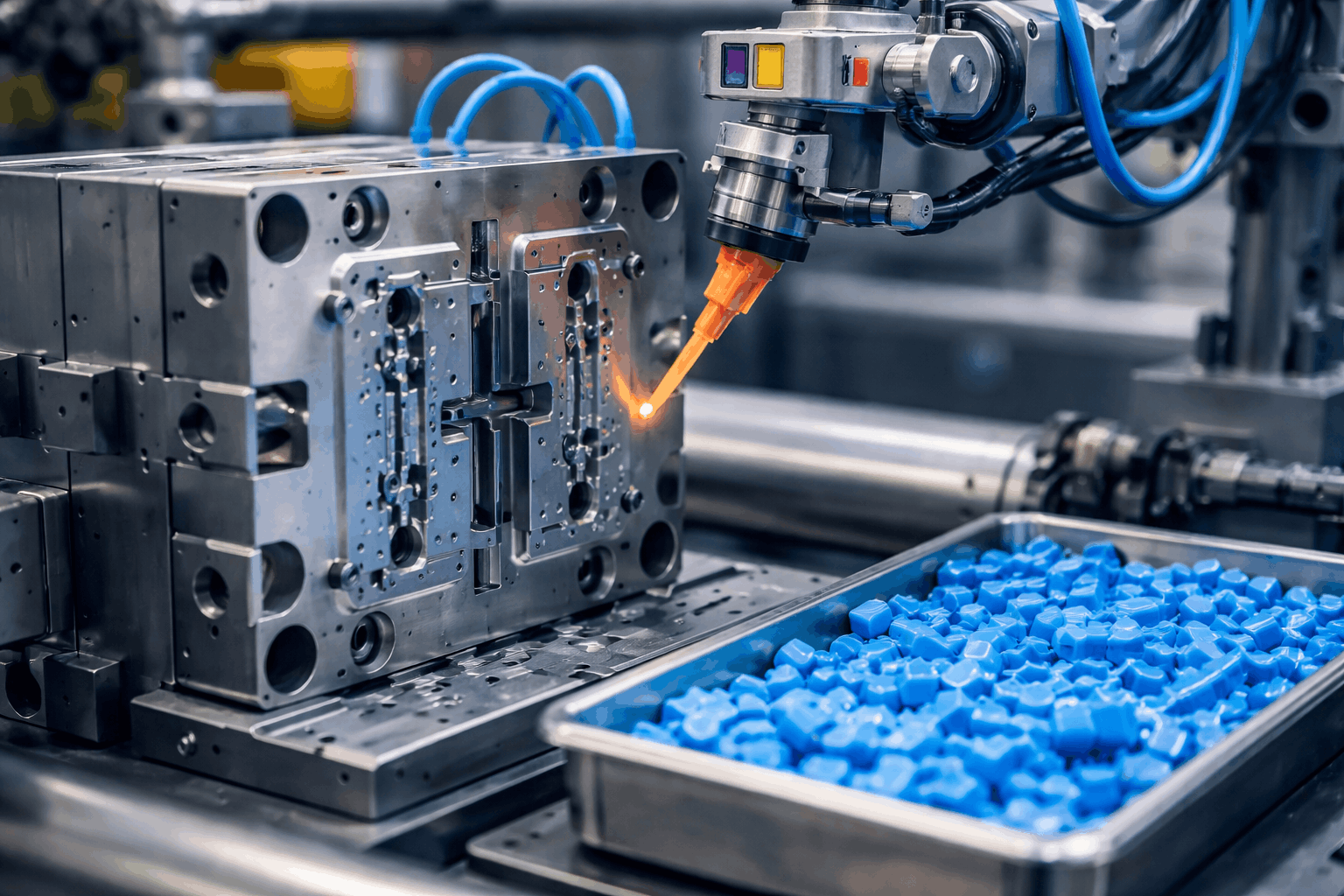
Injection molding forces molten plastic into a mold and creates identical parts quickly. It delivers repeatable quality and durability at scale. But not every project needs millions of parts, and that’s why your volume decision matters.

What Is Low-Volume Injection Molding?

Low-volume molding usually covers 100 to 10,000 parts. It’s the right choice when you’re still shaping or validating your product.

Best for:

  • Market testing
  • MVPs and early prototypes
  • Fit and function checks
  • Limited batches before launch

Low-volume molds use aluminum or 3D-printed tooling. They do not last forever, but they cut tooling cost and speed up turnaround.

Choose low-volume when:

  • You want fast production
  • You expect design updates
  • You want low upfront cost
  • Your product is not validated yet

Many teams pair 3D printing with low-volume molding so they can test parts before ordering larger molds.

What Is High-Volume Injection Molding?

High-volume molding starts at 50,000 parts and goes into the millions. This method supports products with steady demand.

Best for:

  • Mass-market consumer items
  • Automotive components
  • Medical parts with long lifecycles
  • Products sold nationally or globally

High-volume molds use hardened steel, built to last millions of cycles. The tooling cost is higher, but the cost per part drops significantly.

Choose high-volume when:

  • Your design is final
  • Your sales are stable
  • You want the lowest cost per part
  • You can invest in tooling upfront

A 2024 report from Plastics Market Insights showed that brands reduce part costs by 40–70% when they move from low-volume tooling to steel molds.

Low-Volume vs High-Volume Injection Molding Cost Breakdown

Low-Volume vs High-Volume: Cost Breakdown

FactorLow-Volume Injection MoldingHigh-Volume Injection Molding
Tooling Cost₹20,000 – ₹1,50,000₹2,00,000 – ₹10,00,000+
Cost per Unit₹20 – ₹100+₹2 – ₹10
Tooling Lead Time1–3 weeks4–8 weeks
Design FlexibilityHighLow
Best ForTesting, short runsMass production

According to a 2025 analysis by Plastics Technology, breakeven usually happens around 20,000–30,000 units for common consumer products.

Speed and Flexibility: Low-Volume Wins

If you want to launch fast, low-volume molding gives you the edge. You get tooling ready in weeks, and you can change the design without paying a huge penalty.

This helps when you’re running:

  • Crowdfunding campaigns
  • Design variation tests
  • Seasonal or limited-run products

Cost Efficiency: High-Volume Wins at Scale

High-volume molding reduces cost per part once you scale production. Steel molds offer better consistency, polish, and tool life.

Manufacturing advisor Ryan Keller puts it simply: “Low-volume saves you at the start. High-volume saves you over time.”

Quality and Finish: Both Can Deliver

Modern low-volume molds can still achieve ±0.1 mm tolerances and smooth finishes. High-volume steel molds add even higher precision and durability.

Precious3D works with verified mold makers across India to maintain consistent results for both production types.

Injection Molding FAQs

Low-volume is cheaper upfront. High-volume becomes cheaper when you scale.
Low-volume: 1–3 weeks. High-volume: 4–8 weeks.
Not reliably. They wear out faster.
High-volume steel molds hold tighter tolerances.
Yes. Many companies do this once they validate demand.
ABS, PP, Nylon, PC, TPU, and others.

Applications of Injection Molding in Medical Device Manufacturing

Injection Molding for Medical Devices: The Real Backbone of Modern Healthcare

Let’s be honest — when you’re dealing with medical parts, there’s no room for “close enough.” You need precision. You need sterility. You need every piece to match the last one.

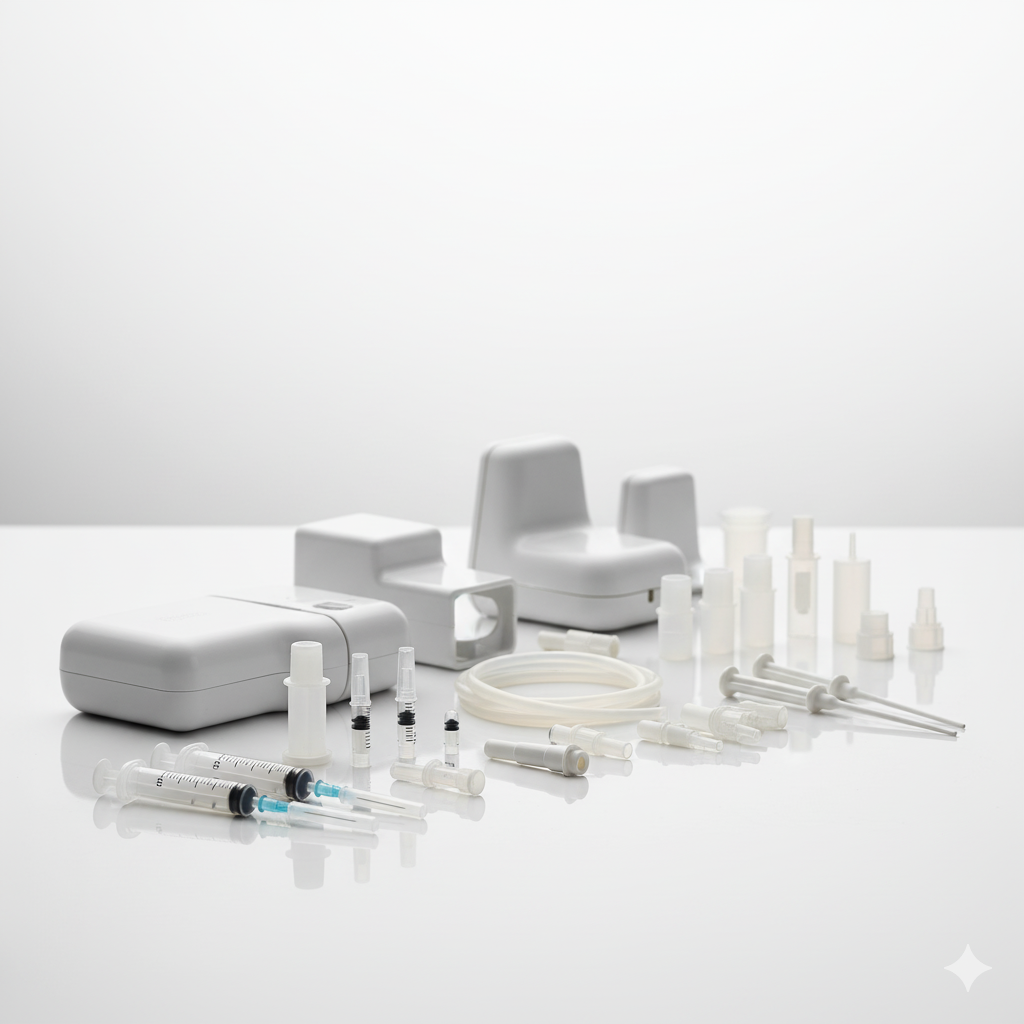
That’s why so many medical manufacturers rely on injection molding. It’s consistent, scalable, and built for strict hygiene standards. From syringes to surgical handles, most of the plastic parts used in hospitals start their life inside a mold.

At Precious3D, we’ve seen how this process turns ideas into safe, functional products — fast. Here’s how it fits into modern healthcare.

1. Why Injection Molding Works So Well in Medicine

You already know how tough the medical field is when it comes to standards. Injection molding checks every major box.

  • Every part is identical, even across thousands of units.
  • You can scale from 100 to a million without losing accuracy.
  • It works with biocompatible and antimicrobial materials.
  • And yes — it’s cleanroom-friendly.

In short, you get a method that’s built for mass production without compromising on safety.

According to Grand View Research (2025), over 55% of medical plastic components come from injection molding — and the market will cross USD 31 billion by 2027.

2. What Kind of Medical Parts Use Injection Molding?

You’ll find molded parts everywhere in a hospital.

Single-Use Items

Syringes, pill containers, IV connectors, and test tube caps.

Diagnostic Equipment

Covers and casings for glucose monitors, ECGs, or portable lab devices.

Most of these use materials like ABS, Polycarbonate, or PEEK — all proven safe and durable.

“Injection molding has made medical devices cheaper, cleaner, and easier to scale than any other process.” — Dr. Karen M., Biomedical Engineer (MedTech Journal, 2024)

3. The Role of Cleanrooms

Contamination kills credibility — and sometimes, more than that. That’s why many medical parts are molded inside ISO Class 7 or 8 cleanrooms. These rooms control air, dust, and microbes so nothing unwanted touches the final product.

If you don’t have access to such facilities, you can work with certified partners like Precious3D. We maintain controlled cleanroom environments that meet ISO and FDA standards.

4. Regulations You Can’t Ignore

Medical molding isn’t only about shaping plastic — it’s about passing audits. Here’s what every compliant manufacturer follows:

  • ISO 13485 for medical device quality systems
  • FDA / CE requirements
  • Full traceability of materials and batches
  • Compatibility with EtO, gamma, or steam sterilization

Injection molding supports these standards because it’s repeatable, documentable, and clean by design.

5. Rapid Prototyping & Small-Batch Production

Here’s the good part — you don’t need to wait months to test an idea. Using 3D printing and low-volume molding, medical startups can move from concept to sample in about 2–3 weeks.

We often see teams create:

  • Proof-of-concept models for trials
  • Preclinical test units
  • Functional MVPs for investor demos

6. Why Manufacturers Stick With It

If you’re wondering why everyone uses molding – it’s simple:

  • Precise results
  • Minimal waste
  • Fast turnaround
  • Cleanroom-ready
  • Compatible with sterilization

And because molds can last through thousands of cycles, your cost per part drops quickly.

7. What Precious3D Brings to the Table

We don’t just mold parts — we guide you from concept to compliant production. Here’s what you get with us:

We’ve worked with medical R&D teams, hospitals, and startups to bring ideas to life — reliably and on budget.

Our End-to-End Process


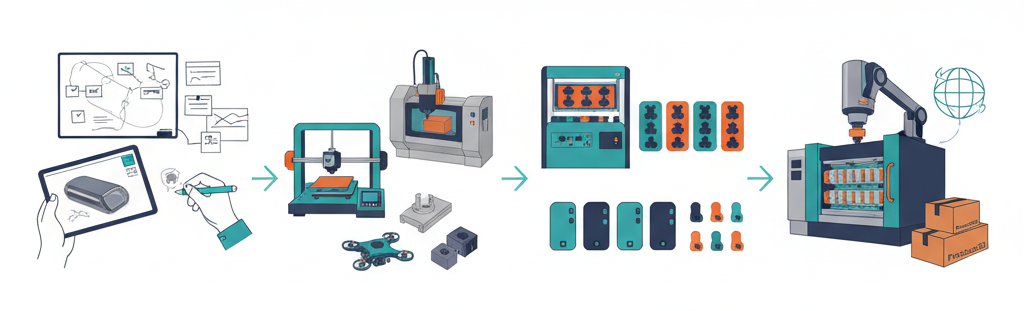
At Precious3D, we simplify your journey from concept to mass production with a complete design-to-manufacture workflow:

1. Concept Design

We understand your product’s function, size, and brand style, then convert your ideas into enclosure concepts aligned with your goals.

2. Prototyping

Using 3D printing (FDM, SLA) or CNC machining, we deliver prototypes in days — perfect for testing ergonomics and aesthetics.

3. Low-Volume Production

Need 100–500 units for investor demos or pilot launches? We use vacuum casting or soft tooling to deliver fast, affordable results.

4. Mass Production

Once validated, we move seamlessly to injection molding for large-scale manufacturing — ready for export worldwide.

Final Thoughts

Injection molding is the quiet hero behind modern healthcare. From small diagnostic casings to complex surgical tools, it keeps things accurate, sterile, and scalable.

If you’re developing a new medical device, start with a process that’s proven — injection molding. And if you want to get it right the first time, Precious3D can help you make it happen.

What plastics are safe for medical molding?

Can molded parts be sterilized?

What cleanroom standard do medical molds follow?

How long does production take?

Why should I choose Precious3D?