Choosing the right injection molding partner is one of the most critical decisions in your product development journey. Whether you’re a startup building your first prototype or an established company scaling production, the manufacturer you select directly impacts your cost, quality, timelines, and ultimately your market success.
India has rapidly emerged as a global manufacturing hub, offering competitive pricing, skilled engineering talent, and growing infrastructure. However, not all suppliers are created equal — and selecting the wrong partner can lead to delays, poor quality parts, and unexpected costs.
This guide walks you through how to evaluate and choose the right injection molding partner in India – from technical capabilities to hidden red flags.
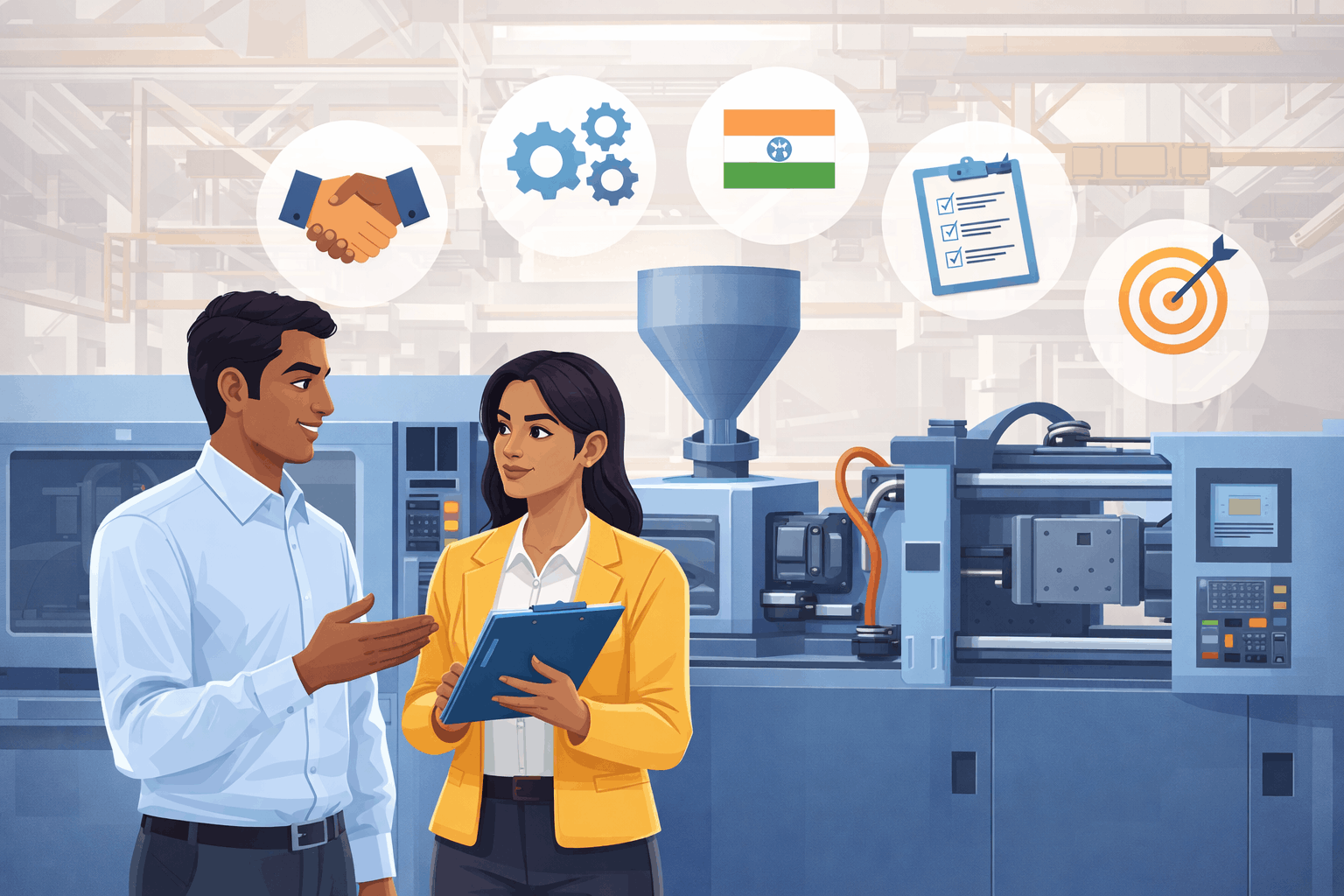
Why Choosing the Right Partner Matters
Injection molding is not just about producing plastic parts. It involves:
- Tool design and engineering precision
- Material selection expertise
- Process optimization
- Quality control systems
- Supply chain reliability
A capable partner acts less like a vendor and more like a manufacturing extension of your team.
Key Factors to Evaluate
1. Technical Expertise & Manufacturing Capabilities
Not all injection molding companies have the same capabilities. Some specialize in high-volume production, while others focus on prototyping or low-volume manufacturing.
Ask:
- Do they offer Design for Manufacturing (DFM) support?
- What types of materials do they handle (ABS, PP, Nylon, PC, etc.)?
- What is their machine tonnage range?
- Can they handle complex geometries or tight tolerances?
A strong partner will proactively suggest improvements to reduce cost and improve manufacturability — not just execute your design blindly.
2. Tooling Capabilities (In-House vs Outsourced)
Tooling is often the most expensive upfront cost in injection molding. Companies that manage tooling in-house typically offer:
- Faster turnaround times
- Better quality control
- Easier iteration and modifications
If tooling is outsourced, communication gaps can lead to delays and increased costs.
3. Quality Assurance & Certifications
Quality consistency is non-negotiable, especially for industries like medical devices, automotive, or electronics.
Look for:
- ISO certifications (ISO 9001, ISO 13485 if medical)
- Defined inspection processes
- Use of measurement tools (CMM, gauges, etc.)
- Documented quality control systems
Ask for sample inspection reports before committing.
4. Cost Transparency (Beyond Per-Part Pricing)
Many buyers make the mistake of choosing suppliers based only on the lowest per-unit cost. This often leads to hidden expenses later.
A reliable partner should clearly break down:
- Tooling cost
- Per-unit production cost
- Material cost variations
- Maintenance and lifecycle costs
- Injection molding cost in India
5. Turnaround Time & Scalability
Your manufacturing needs may evolve quickly – especially if you’re a startup.
Evaluate:
- Lead time for tooling
- Production turnaround
- Ability to scale from prototypes to mass production
A good partner grows with you.
6. Communication & Responsiveness
This is often overlooked but critical.
You want a partner who:
- Responds quickly
- Explains technical details clearly
- Provides regular updates
- Is comfortable working with international clients
Poor communication is one of the biggest causes of project failure in manufacturing.
Comparison Table: What to Look For in an Injection Molding Partner
| Criteria | Ideal Partner | Red Flag |
|---|---|---|
| Tooling Capability | In-house tooling | Fully outsourced tooling |
| Design Support | Provides DFM feedback | No design input |
| Pricing Transparency | Detailed cost breakdown | Vague or hidden costs |
| Quality Assurance | ISO certified + inspection reports | No certifications |
| Communication | Fast, clear, proactive | Delayed or unclear responses |
| Scalability | Prototype → mass production capability | Limited production flexibility |
| Material Expertise | Wide range of engineering plastics | Limited material knowledge |
| Lead Time | Defined and realistic | Frequent delays |
Common Mistakes to Avoid
Choosing the Cheapest Option
Low upfront cost often results in:
- Poor mold quality
- Frequent defects
- Higher long-term costs
Ignoring DFM Feedback
If your partner isn’t suggesting design improvements, you’re likely overpaying or risking part failure.
Not Validating Samples
Always test prototypes or first articles before full production.
Questions You Should Always Ask
Before finalizing a partner, ask:
- Can you share similar project case studies?
- What is your mold maintenance policy?
- How do you handle defects or rework?
- What is your typical rejection rate?
- Can you support design optimization?
Why India Is Becoming a Preferred Choice
India offers a compelling mix of:
- Cost efficiency compared to Western markets
- Growing ecosystem of skilled engineers
- Increasing adoption of global quality standards
- Flexibility for both low-volume and high-volume production
For startups and SMEs especially, India provides a balanced alternative to China in terms of cost, communication, and customization.
Final Thoughts
Choosing the right injection molding partner is not just a procurement decision — it’s a strategic one. The right partner can help you:
- Reduce costs through better design
- Improve product quality
- Accelerate time to market
- Scale efficiently
Take the time to evaluate thoroughly, ask the right questions, and prioritize long-term value over short-term savings.
Looking for the Right Injection Molding Partner in India?
If you’re planning a project and want expert guidance, consider working with a team that offers:
- End-to-end support (design → tooling → production)
- Transparent pricing
- Fast turnaround times
- Experience across industries
Getting your design reviewed early can save thousands in production costs.