All Posts By

Chinmay Rathi

Founder of Precious3D, Chennai. Chinmay helps hardware startups and manufacturers take products from concept to manufacturing through rapid prototyping, 3D printing and low-volume injection molding.

Advances In 3d Printing: Innovations And Potential For Future Growth

advances in 3d printing

The young 3d printing industry has started to revolutionize every sphere of life. Owing to lower costs, higher accuracy, high execution time, availability of new materials and faster, portable applications, new techniques, and innovations are enriching the industry worldwide. It has entered each and every sphere of our life and some of the innovations are overwhelming, the picture showing what our existing world can become. There have been many advances in 3d printing since its inception. Some major advances in 3d printing are discussed below.

Major advances in 3d printing

Defense
advances in 3d printing

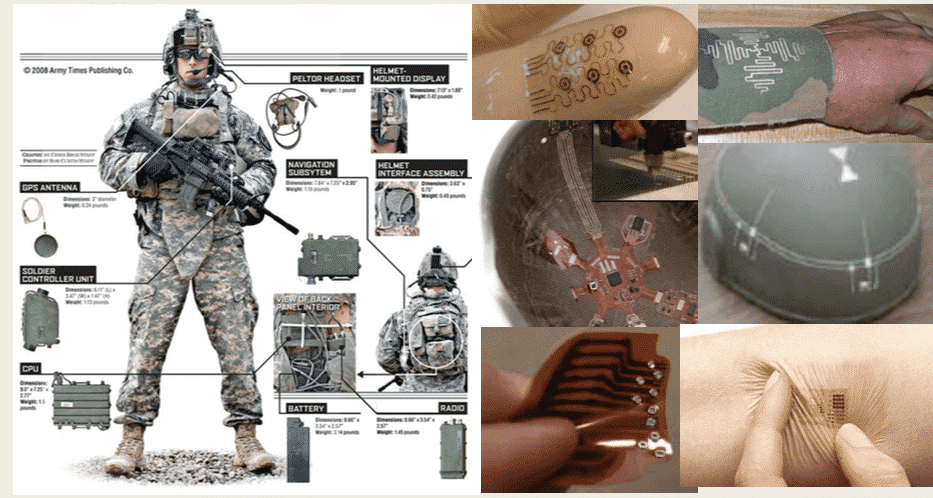
The biggest example, to witness the advances in 3d printing, is the defense sector. 3d printing is making waves in the defense industry, it demands precise design within the stipulated time, and more prototypes are required for mockups, at a low cost. The U.S. Government has started developing FDM system using 3d printing. The Tiberius fully made with 3d printing, is being commissioned in U.S. army.

Housing and architecture

3d printing is now being used to build houses, yes you read it correctly. The Chinese construction company WinSun Decoration Design Engineering has done this impossible feat by printing 10 houses in one day. It has now gone on to print an entire 5-story apartment building and a standalone villa. The aim is to be able to construct homes at affordable prices for the Chinese market. The smaller houses cost just around €4,500 ($5,000) to produce. The most popular project is the 3d Print Canal House in Amsterdam which was done by a 3d printer.

advances in 3d printing

3d print canal house

The first pedestrian bridge was inaugurated 14th of December of 2016 in the urban park of Castilla-La Mancha in Alcobendas, Madrid. The 3DBUILD technology used was developed by ACCIONA.

Consumer

The objectives of aesthetic testing, a creation of lifelike prototypes and use of different materials made 3d printing into. 3d printing is being used extensively for making electronic goods, such as motherboards of laptops, the drones and also in Robotics.

Fashion

Cuddly teddy bears straight off the printer? The Disney Research Team in the United States has found a way to print in wool, meaning that alongside hard, precise objects, this new technology can now also be used to create things that are soft and squeezable. The printer builds up the yarn in layers, producing a unified mass that looks and feels like felt. In collaboration with a team from Carnegie Mellon University’s Human-Computer Interaction Institute in Pennsylvania, USA, they even printed a move-able teddy bear arm.

Biomedicine

advances in 3d printing

While 3d printing is already widely used in dentistry to print teeth and parts of jawbones, In the first clinical trial of its kind, a team at University College London has been carrying out tests and is months away from implanting the printed ears into patients. The team is also working on printed noses, tracheae, tear ducts or blood vessels. It is a cost-effective solution and can be personalized with the requirements of a person. 3d printing has made people with standing difficulties, walk for the first time.

Aircraft designing

advances in 3d printing

3d printing is also being used extensively in aircraft designing. Airbus, a leading aircraft manufacturer, is already using a variety of 3d printed plastic and metal brackets in its fleet of developmental aircraft. Airbus estimates 3d printing could reduce its raw material costs by up to 90% as it reduces the need for raw materials and carbon footprint.

Metallurgy

advances in 3d printing

3d printing in metal is pricey. But Argentinian engineer Gastón Accardi has come up with a metal printer that cost him less than €2 to make. Essentially a marker filled with a copper acid solution, it uses the concept of electroplating to build up 3d objects layer by layer in different types of metal. Although still a little slow, the machine could one day be a boost to small businesses.

Automotive industry

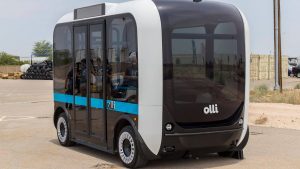
In 2014, Local Motors printed the first 3d-printed car from an ABS carbon-fiber blend (about 80/20 respectively) called Strati. Today, the company has three models and an autonomous electric-powered shuttle named Olli. In addition, Honda released a new version of the Micro-Commuter in October at CEATEC 2016 in Japan. A single-seater with about a 50-mile driving range, the body and majority of the panels on the Micro-Commuter are 3d printed. In early 2014, Swedish supercar manufacturer Koenigsegg announced the One; a supercar that utilizes many components that were 3d printed. The One has side-mirror internals, air ducts, titanium exhaust components, and complete turbocharger assemblies that were 3d printed as part of the manufacturing process.

Urbee is the name of the first car in the world car mounted using the technology 3d printing (its bodywork and car windows were “printed”). Created in 2010 through the partnership between the US engineering group Kor Ecologic and the company Stratasys (manufacturer of printers Stratasys 3d), it is a hybrid vehicle with a futuristic look.

Food industry

advances in 3d printing

Italian food producer, Barilla, is using 3d printing for custom pasta production. A German nursing home uses a 3d printer to create a food product called Smooth foods. It is a concoction of mashed peas, carrot, and broccoli. This tasty dish is then congealed with edible glue and served to elderly residents who face difficulties in chewing.

Oil and gas industry

advances in 3d printing

The 3d printing is also making way into oil and gas industry. It has a possibility to reduce transportation costs, storage costs and decrease the cost of drilling oil. General Electronics has started making nozzles using 3d. Gartner predicts that 10% of gas companies will use AM in the production of parts by 2019.

Future growth of the industry

advances in 3d printing

The advances in 3d printing prove that this industry is touted to increase at a phenomenal rate.

advances in 3d printing

According to the market research report “3d Printing Market by Offering (Printer, Material, Software, Service), Process (Binder Jetting, Direct Energy Deposition, Material Extrusion, Material Jetting, Powder Bed Fusion), Application, Vertical, and Geography-Global Forecast to 2023”, the 3d printing market is expected to be worth USD 32.78 Billion by 2023, at a CAGR of 25.76% between 2017 and 2023.

Read more:
3d Printing In Orthodontics: Transforming Dentistry

Future Of 3d Printing In India

3d Printing In Automotive Industry

3d printing in automotive industry

Remarkable advances in additive manufacturing (AM) technologies, commonly known as 3d printing, over the past decade have helped to transform the prospective ways in which products are designed, developed, manufactured, and distributed. For the automotive industry, these advances have opened doors for newer designs; cleaner, lighter, and safer products; shorter lead times and lower costs. While automotive original equipment manufacturers (OEMs) and suppliers primarily use AM for rapid prototyping, the technical trajectory of AM makes a strong case for its use in product innovation and high-volume direct manufacturing in the future.  3d printing in automotive industry has revived it.

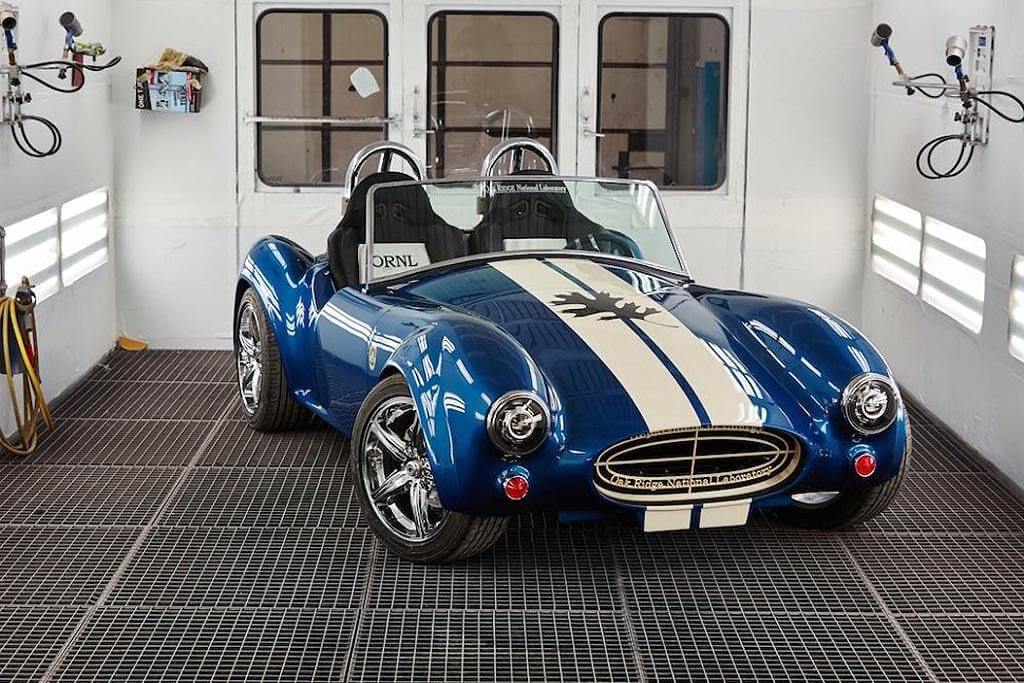
New developments in AM processes, along with related innovations in fields such as advanced materials, will benefit production within the automotive industry as well as alter traditional manufacturing and supply chain pathways. The very famous Shelby Cobra and Local Motors 3d printed car are two examples of the result of the advancement of 3d printing in automotive industry, which has paved a way to experience a notable transition that in the automotive industry.

How is 3d printing in automotive industry paving the way for new car designs?

This printing technology allows for rapid prototyping instead of relying on the traditional method of making a mold and manufacturing a part or hand-tooling a part. There are many advantages of using 3d printing instead of traditional manufacturing, not the least of which are lower costs and faster speeds. The method allows for on-demand tooling, and the parts are lighter and the fabrication process is much more environmentally friendly, requiring a fraction of the energy cost that is required in traditional manufacturing.

In the current landscape, cars are built on long assembly lines that consume staggering amounts of energy, which means even cars built to live an eco-friendly existence roll off the assembly line with a huge carbon footprint. Choosing 3D printing over traditional manufacturing in the automotive industry mainly includes two positive impacts: the exclusion of leftover waste and minimum generation of heat energy, which contributes to an eco-friendly method of processing.

Biggest contribution of 3d printing in Automotive Industry

3d printed Shelby Cobra

3d printing in automotive industry

3d printed Shelby Cobra

Next-generation manufacturing takes on a 50-year-old icon as ORNL researchers transform this classic sports car into a 3d-printed laboratory on wheels. 3d printing enables the seamless integration of advanced technologies with design flexibility and modularity. It provides a platform for rapid development and evaluation. The 3d printed car incorporates “plug and plays” components such as new engine, battery, and fuel cell technologies; hybrid system designs; and power electronics and wireless charging systems, allowing researchers to easily and quickly test out innovative ideas in a driving laboratory.

Olli by local motors

3d printing in automotive industry

Olli-3d printed car by local motors

Local Motors has created history by 3d printing its first Olli, self-driving shuttle in the company’s Knoxville micro-factory. Local Motors has long been innovating the future of vehicle 3d printing. And, Olli is believed to be the only 3d printed transit vehicle on Earth.


3d Printed Architectural Models- Redefining The Architecture

3d printed architectural models

The advent of  3d printing has changed tremendously the way of manufacturing a component. The wide range of materials a printer can accommodate opens up new potential for environmental-friendly furniture and decor. Choosing additive manufacturing over traditional manufacturing proves to be a boon for the mother Earth as it produces much less wastage. In this era of pollution all around, this is a smart choice to make. 3d printing has led to the major transformation in the architectural field. The 3d printed architectural models have redefined the architecture.

Intricate designs depending upon a person’s interest can be designed in design software and scanned for printing purpose and when fed into the machine it gives the customer the designed product. Adding on to this the customer can also choose his own materials for the product.This makes the designer save time in searching for shops which have the product in the design which he thought of.

The technology of 3d printing provides the means to prototype designs that cannot be made through traditional manufacturing, which has opened the door to virtually limitless possibilities for the interior design industry. From light fixtures that take on the appearance of lace to bicycle-gear-shaped chandeliers, lighting designers have embraced 3d printing to create functional art for the home. Smaller decorative furnishings like creative containers, stools, and planters are less expensive, easier to print yourself, and adds visual interest to any interior. The main usage and point of attraction are objects can be produced as a whole or separate parts that make up the whole object to be produced. These separate parts can be joined together to incredible tolerances such that it is difficult to predict whether the whole object is produced from the machine or separate parts are produced and joined.This shows the accuracy of manufacturing components.

The best 3d Printed Architectural Models

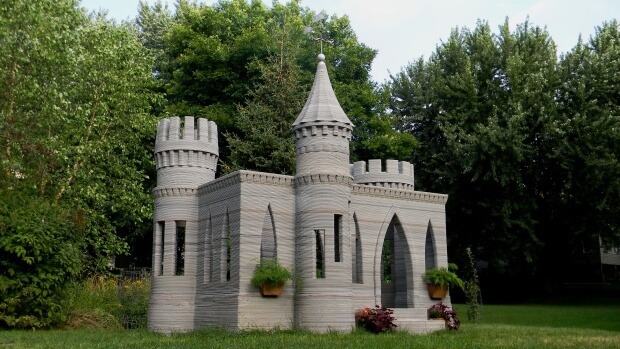
3d printed concrete castle

3d printed architectural models

3d printed castle

The first example of the best 3d printed architectural models is the 3d printed concrete castle made by a Minnesota based engineer named Andrey Rudenko. He with his two years of research and hard work in the field of technology came up with the idea and processing of a 3d printed concrete castle which is life-sized and capable of habitation. The walls of the small fortress, as well as three tops of the towers, have been fabricated separately and finally assembled into a single unit of free-standing structure. Looking at the castle no one can even doubt it not being a single unit that is the level of accuracy additive method of manufacturing has gained over the years. Not just this, time is consumed on a large scale.

3d printed hotel suite

3d printed architectural models

Construction phase of the 3d printed hotel suite

3d printed architectural models

Lewis Grand Hotel

The second example of the best 3d print architectural models is the 3d printed hotel suite. A Grand suite hotel at the Philippines was built just in 5 days using 3d printing. Hotel owner Lewis Yakich has unveiled the world’s first 3d printed hotel suite—and it even comes with a spacious 3d-printed concrete jacuzzi. The 130-square-meter (1,500 square feet) structure was built for The Lewis Grand hotel in Angeles, Philippines, and took approximately 100 hours of print time to complete.

Yakich collaborated with Andrey Rudenko (the Minnesotan inventor of a 3d concrete printer and builder of the world’s first 3d printed concrete castle).

Their collaboration helped them to:

  • Prepare and ship the 3d printer components over from Minnesota to the Philippines
  • Assemble the machine
  • Create the right concrete mix from local materials, including sand and volcanic ash.

The recently completed two-bedroom villa measures 10.5 meters by 12.5 meters and includes a living room and a jacuzzi room. Plumbing, wiring, and rebars are also installed in the structure

Sounds Impossible? Well, that is the true essence of this method, making impossible things possible.

Read more:

3d Printed Shoes By Adidas: Future Craft 4d

3d Printing In The Medical Field

Traditional Manufacturing Vs 3d Printing – A Cost Analysis

Traditional manufacturing vs 3d printing

Traditional manufacturing vs 3d printing

3d printing is a computer-driven additive manufacturing technology used for producing the final product from a digital model by laying down successive layers of materials. It saves on energy by 40 to 60 percent as it eliminates shipping and other logistics activities. Also, it enables users to produce objects with lesser material. 3d printing service cost has cut up to 70% savings due to prototyping costs. Whereas, traditional manufacturing involves high cost of manufacturing and shipping. Below is the traditional manufacturing vs 3d printing cost analysis.

Comparison of technologies

Traditional manufacturing vs 3d printing

Traditional manufacturing

3d printing technology

3d printing

The traditional manufacturing includes the process of injection moulding, machining, forming, and joining which increases the cost of the product. Also, the traditional method involves putting a big sum of money in the process of manufacturing and shipping which further adds up to the final cost. Whereas 3d printing uses processes like Selective Laser Sintering (SLS), Binder Jetting, Stereolithography (SLA), Poly-Jet, Fused Deposition Modelling/Fused Filament Fabrication (FDM/FFF) which is mostly digitally dependent and hence results in producing objects of lesser cost. Even though the initial setup costs are higher, 3d printing has become cheaper than cheap labour in third world countries. Additionally, the costs of 3d printing are still decreasing, with the potential of 3d printers in homes in the near future. Furthermore, the costs of customized products are the same for mass production products.

Traditional manufacturing vs 3d printing- Cost-effectiveness

Traditional manufacturing like injection moulding requires mass production to even out the overhead cost of tooling, labour for assembly, and production. Whereas, with additive manufacturing, the cost of manufacturing of one item stays the same no matter what the quantity is, making it cheaper when the quantity is small.

More customizable, more adaptable

Because the cost is the same for each added unit, it is possible to make an unlimited amount of changes to the product. It can be used for prototyping: you’d use 3d printing to make a prototype and update the prototype until satisfaction. This is a crucial step before getting the product to mass production. It can also be used during the rest of the manufacturing process, to create unique pieces that can be more responsive to your needs, progress in conception and consumers feedback.

No added cost for complexity:

Creating complex mechanical constructions via traditional manufacturing requires precision and skills, especially for the assembly of complex parts, which means that price increases with complexity. It is not the case with 3d printing, which creates an entire piece in one process, instead of creating each component before assembling. Therefore, there is no added cost for complexity.

Traditional manufacturing vs 3d printing- Advantages

Rapid Prototyping

Products can more quickly go from just a design to an actual prototype.

Manufacturing Speed

Just like the previous advantage, the manufacturing speed for a large number of final products is equally fast.

Reduced Costs

When 3d printers were first invented, there were a very limited amount of printers being produced. But now, there are printing companies forming all over the world, creating more 3d printers. The cheapest 3d printer is currently called the PEACHY PRINTER. It is made by Rylan Grayston from Rinnovated Designs in Canada. His printer is primarily used for small craft models.

Warehousing

With traditional manufacturing technologies, it is much faster and cheaper to manufacture additional products that you probably know that you will eventually need. However, with 3d printing, only products that are sold need to be manufactured, thus warehousing of excess inventory is significantly less needed.

3d Printers can produce just about anything

If you have a craving for chocolate or if you are in need of an organ transplant, you’re in luck. 3d printing companies originally sold plastic ink cartridges. But now, they have ink made out of sugar, chocolate, sand, ceramic, metal materials, and even living cells to manufacture an infinite amount of creations.

3d printers are the future of manufacturing businesses

Some jobs can be easily cut because of the  3d printers. 3d printers are not only more productive but are also more environmentally friendly. When you build something, you usually have scraps leftover.  A 3d printer knows the mould and design and builds only what is needed. That makes 3d printers more economical and earth-friendly. 3d printers also have the advantage of becoming a productive manufacturing tool. With the purchase of a commercial 3d printer, higher production volumes can be achieved and larger products can be designed.

Read more:

3d Printer Speed: Time Taken To Print A 3d Model

3d Printed Jewelry- Transforming The Jewelry Designs